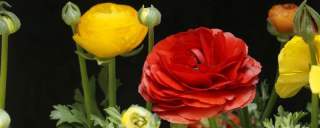
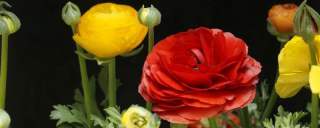
To achieve a continuous indoor bloom of Ranunculus (Ranunculus asiaticus), one must understand and replicate the plant's natural life cycle. This involves manipulating the dormancy, growth, and flowering phases through a practice known as succession planting. The corm's biological clock is governed by soil temperature and photoperiod, making timing the critical factor for success.
Ranunculus corms are not true bulbs but tuberous roots. They enter a natural dormancy period after flowering to survive the hot, dry summers of their native Mediterranean climate. For indoor forcing, we must break this dormancy by providing a cool, moist period that mimics winter rains. This process, called pre-sprouting, is essential for initiating root development and signaling the corm to exit its dormant state. Without this simulated "winter," the corm will not begin its growth cycle.
A single planting will result in a spectacular but finite display lasting several weeks. To have flowers continuously from late winter through spring, you must stagger your planting schedule. The goal is to have a new batch of corms reaching maturity every 3-4 weeks. This ensures that as one group's floral display begins to wane, the next group is just coming into peak bloom, creating an uninterrupted supply of flowers indoors.
Begin your first planting 12-14 weeks before your desired bloom date. For winter blooms, start in early fall. Soak these first corms for 3-4 hours in room temperature water before planting them in containers with excellent drainage. Place the pots in a cool, dark location for about two weeks to encourage root development before moving them to a bright, sunny window or under grow lights.
To establish a continuous cycle, plant a new batch of pre-soaked corms every 2-3 weeks. This interval accounts for the average time from planting to bloom, which is typically 90-100 days under optimal indoor conditions. Your planting schedule might look like this: Batch 1 in early September, Batch 2 in late September, Batch 3 in mid-October, and so forth. This sequential approach will yield waves of blooms from January through May.
Once sprouted, Ranunculus demands specific conditions to thrive indoors. They are cool-season plants and perform best with daytime temperatures between 55-65°F (13-18°C) and slightly cooler nights. They require a minimum of 6-8 hours of very bright, direct light daily; a south-facing window is ideal, but supplemental grow lights are often necessary, especially in winter. The soil should be kept consistently moist but never waterlogged, as the corms are highly susceptible to rot. High humidity and good air circulation will help prevent powdery mildew and other fungal issues, ensuring healthy foliage and prolific flowering.