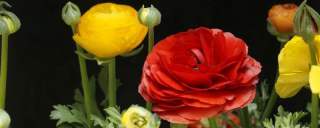
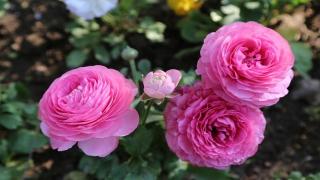
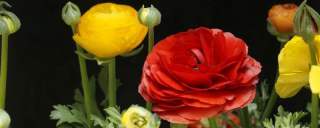
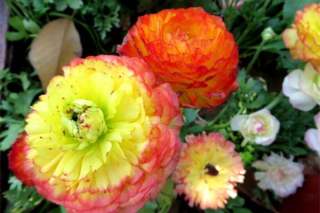
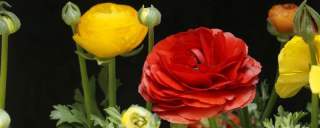
From a botanical perspective, the requirement for a winter chill period in Ranunculus plants is a fascinating adaptation tied to their life cycle and evolutionary history. The answer is not a simple yes or no, as it depends significantly on the specific plant form and its geographic origin. The most commonly cultivated ornamental varieties have a distinct relationship with cold, which is crucial for their successful growth and flowering.
The popular garden ranunculus (Ranunculus asiaticus) possesses a specialized storage organ known as a tuberous root. These structures are not true bulbs but serve a similar function, storing energy for the plant's growth cycle. For these plants, a period of cold, damp conditions—a winter chill—is not merely beneficial but is a physiological requirement. This process, known as vernalization, is a biochemical trigger that signals the plant to break dormancy and initiate flowering once warmer conditions arrive. Without exposure to temperatures between 40-50°F (4-10°C) for several weeks, the tuberous roots may fail to sprout robustly or may produce abundant foliage with few to no flowers. The cold period resets their internal clock, ensuring they do not attempt to grow during an inhospitable winter and are instead primed for a spring bloom.
It is critical to distinguish between the perennial tuberous types and other Ranunculus species. The genus Ranunculus is vast and diverse, encompassing over 2,000 species with varying adaptations. Many wild species, such as the common buttercup (Ranunculus repens), are hardy perennials. These plants are naturally adapted to temperate climates and absolutely require a winter chill to complete their annual cycle. They die back to their rootstock in autumn, rely on the cold period to satisfy their dormancy requirements, and then regenerate new growth from the crown in spring. For these species, the winter chill is non-negotiable for survival and propagation.
The need for a chill period is deeply rooted in a plant's geographic origin. Ranunculus asiaticus is native to the Mediterranean region and parts of southwestern Asia. This climate is characterized by cool, moist winters and hot, dry summers. The plant's natural life cycle has evolved to grow and flower in the cool spring, retreat into dormancy during the harsh summer heat, and then use the mild winter chill to break that dormancy. When we cultivate these plants in different climates, we must replicate this natural cycle. In warmer zones (USDA 8-10), tubers can be planted in autumn for a spring bloom, receiving their chill in the ground. In colder zones, gardeners simulate winter by storing the dried tuberous roots in a refrigerator or another cool, dry place for 4-6 weeks before spring planting.