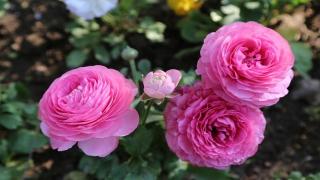
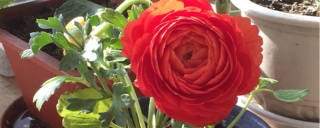
From our perspective, the best time for you to intervene is when we have entered our summer dormancy. After our beautiful blooms fade and our foliage yellows and dies back, we redirect our energy downward, retreating into our corms. This is our resting period. Dividing us at this stage is least disruptive. You are working with our stored energy reserves while we are naturally inactive, much like you would be while sleeping. Attempting to divide us while we are actively growing or flowering is a significant shock, diverting precious energy from bloom production to wound healing and can severely weaken or even kill us.
Our propagation strategy is centered around our corms, which are not true bulbs but solid, swollen stem bases designed for storing nutrients. Over a growing season, the original "mother" corm you planted exhausts its stored energy to produce our roots, leaves, and flowers. In the process, it actually shrivels up and dies. However, before it does, it generates several new "daughter" corms around its base, each a genetically identical clone ready to grow into a new plant. It also produces tiny, rice-like secondary growths called cormels. Your task is not to cut a single corm into pieces, but to gently separate these naturally formed individual corms and cormels.
When you carefully dig us up, you will feel the cluster of new corms attached to the spent, papery remains of the old one. Please handle us gently; we are fragile and our new growth points (the little pointed buds or "eyes") can be easily damaged. Cradle our cluster and gently twist the new corms apart. They should separate naturally at their basal plates. Discard any soft, mushy, or diseased corms, as these will only rot and potentially spread infection. The largest, firmest daughter corms will produce the most vigorous blooms next season. The smaller cormels can be nurtured in a protected nursery bed for a season or two until they reach flowering size.
Once separated, we require a critical period of curing and rest. Please place us in a single layer in a cool, dry, and airy location for about one to three weeks. This allows the slight abrasions and fractures from the separation to callus over, forming a protective seal that prevents rot-causing pathogens from entering when we are replanted. This dry rest mimics the natural dry summer conditions we are evolutionarily adapted to. After this rest, we are ready to be stored in a cool, dark, and dry place until the optimal autumn planting time arrives, when cooler soil temperatures signal us to wake up and begin rooting again.