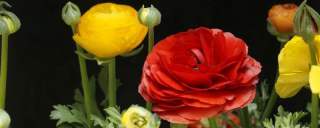
Ranunculus are prized for their exquisitely layered, tissue-paper-like blooms, but their tendency to droop can be frustrating. From the plant's perspective, this is not an aesthetic failure but a critical physiological response to stress. Understanding these internal processes is key to effective troubleshooting.
Our vascular system, consisting of xylem, is our internal plumbing. It relies on a constant transpiration pull (water loss from leaves and petals) to draw water and nutrients from our roots upward. When you underwater us, this crucial column of water breaks. The cells in our stems and flower necks lose turgor pressure—the water pressure that keeps them rigid—and they collapse, causing the characteristic droop. Conversely, overwatering suffocates our roots in saturated soil, preventing them from absorbing water at all. This creates a functional drought where we are surrounded by water but cannot drink, leading to the same loss of turgor and subsequent wilting.
We require a tremendous amount of energy to keep our large, complex flowers upright and vibrant. This energy is produced through photosynthesis in our leaves. If we are placed in conditions with insufficient light, our energy production plummets. Without this fuel, we cannot maintain the high metabolic activity needed to support the water and nutrient transport to the flower head, leading to stem weakness and drooping. Additionally, high temperatures accelerate our respiration rates, causing us to burn through our energy reserves faster than we can produce them, further contributing to collapse.
The sheer weight of our blooms is a significant structural challenge. Our stems may simply be biomechanically overwhelmed, especially if we were grown in low-light conditions that caused us to develop thinner, weaker, and more etiolated stems that cannot bear the load. Furthermore, the stage of our life cycle is important. As we progress through our vase life, our flowers are naturally senescing (aging). The hormonal balance shifts, and the cells at the abscission zone (a weak point where the flower meets the stem) begin to break down. This process, combined with the gradual depletion of water and carbohydrate reserves, makes drooping an inevitable part of our final life stage.
Being cut is a traumatic event. We are instantly severed from our primary water and nutrient source. The act of cutting also inevitably introduces air bubbles into our xylem vessels, creating an embolism that blocks water flow. Our immediate physiological response is to seal the wound to prevent pathogen entry, but this can also further impede water uptake. Without a prompt drink of water, our cells begin to lose turgor within minutes. This is why the post-harvest handling before we reach you is so critical to our longevity and posture.