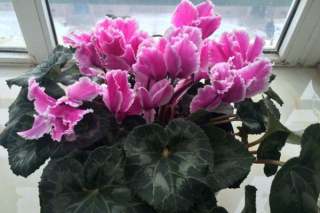
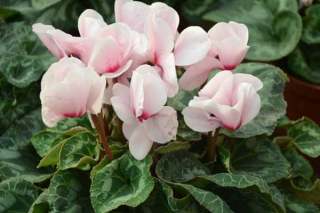
From my perspective, as a Cyclamen persicum, becoming "leggy" is not a choice but a desperate response to my environment. My primary trigger for this elongated, weak growth is a simple lack of light. My leaves are solar panels, designed to capture photons and convert them into the energy I need to flourish. When light is insufficient, my internal survival mechanisms kick in. I must find more light, and quickly. I begin to direct my resources into rapid stem elongation, stretching my leaf stalks (petioles) and flower stems far beyond their compact, ideal form in a frantic attempt to reach a brighter location. This rapid growth comes at a cost; the stems are thinner, weaker, and unable to support the weight of my leaves and blooms properly, leading to a floppy, unattractive appearance.
My natural growth cycle is intrinsically linked to cool temperatures. In the wild, I bloom during the cool, mild seasons of autumn, winter, and early spring. When I am kept in an environment that is consistently too warm, especially above 68°F (20°C) during the day, it disrupts my biological programming. The heat signals a season that is not my active growth period, encouraging weak, spindly growth as if I am trying to hurry through my lifecycle. Furthermore, warm air holds more moisture, reducing the humidity around my leaves. This can cause me to stretch my stems even further in a subtle attempt to find a microclimate with better conditions, contributing to the leggy habit.
While less common than light and temperature issues, the nutrients I receive play a crucial role in my structure. A fertilizer with a high Nitrogen (N) value, relative to Phosphorus (P) and Potassium (K), can promote an overabundance of soft, green leafy growth at the expense of strong stems and prolific flowering. This is like being fed a diet that encourages rapid but weak expansion. My stems shoot up quickly but lack the density and strength to remain compact and self-supporting. I thrive on a balanced, water-soluble fertilizer applied sparingly during my active growth phase, which encourages all parts of my being to develop in harmony.
To help me return to my robust, compact self, you must replicate my ideal conditions. Please provide me with bright, indirect light. An east or north-facing windowsill is often perfect, offering plenty of light without the harsh, leaf-scorching direct sun of a south or west exposure. Keep me cool, with nighttime temperatures ideally between 50-60°F (10-15°C) and daytime temperatures not exceeding 68°F (20°C). This cool period is essential for strong, dense growth and prolonged flowering. When watering me, always water from below by placing my pot in a saucer of water for about 15-30 minutes. This prevents water from sitting on my tuber, which can cause rot, and allows me to drink what I need. Finally, after my blooming period, I will enter a dormant phase. My leaves will yellow and die back. This is normal. Reduce watering significantly and store my pot in a cool, dark place for a few months. When I show signs of new growth, repot me with fresh soil, resume watering, and return me to a bright, cool spot to begin the cycle anew with strong, compact growth.