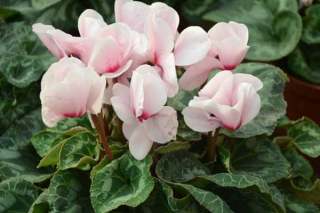
To understand my light needs, you must first understand where I come from. My ancestors are from the Mediterranean region and parts of southern Europe, where we thrive in rocky, well-drained hillsides and open woodlands. My life cycle is key: I bloom from autumn through to spring, and then I go dormant during the hot, dry summer months. This means my active growing season coincides with the cooler, shorter days of the year when the sun is less intense. In my natural setting, I am accustomed to growing beneath larger shrubs and trees. This provides me with precious filtered or dappled sunlight. The canopy above protects my delicate foliage from the harsh, direct rays of the midday sun while still allowing plenty of bright, indirect light to reach me for photosynthesis.
Direct sunlight, particularly the intense rays of a midday or afternoon sun, is incredibly stressful for me. My beautiful, heart-shaped leaves are not equipped with the same protective mechanisms as sun-loving plants like lavender or rosemary. When exposed to direct sun for prolonged periods, the intense light and heat essentially cause my leaves to cook. You will see this as leaves turning pale, developing yellow or brown, crispy patches, and scorched edges. This damage is not just cosmetic; it severely impairs my ability to produce food. Furthermore, the excessive heat that accompanies direct sunlight will cause my delicate flowers to wilt and fade much more quickly, drastically shortening their display. It also increases transpiration, leading to rapid water loss from my pot, which can cause devastating root rot if caregivers overcompensate with too much water.
For me to truly thrive and reward you with months of spectacular blooms, I require an environment that mimics my native dappled woodland. The perfect spot is one that receives abundant bright, indirect light. An east-facing windowsill is often ideal, as it provides the gentle warmth of the morning sun, which is much less intense than the afternoon sun. A north-facing window can also be excellent, offering consistent bright light without the direct beams. If the only available light is from a south or west window, I must be placed several feet back from the glass or shielded by a sheer curtain. This filter will diffuse the strong direct light, transforming it into the soft, bright illumination I crave. During my dormant period in the summer, when I have dropped my leaves, I require a cool, dark, and dry spot to rest until I signal I am ready to grow again.
My relationship with light is also deeply tied to temperature. I am a cool-weather plant. My preferred temperatures during my growing and blooming season are between 60°F and 68°F (15°C - 20°C). A spot with bright, indirect light is often cooler than a windowsill baking in full sun. The combination of intense direct sunlight and high temperatures is a recipe for disaster, accelerating moisture loss, scorching my leaves, and causing my flowers to collapse. In the winter months, when the sun is lower in the sky and less powerful, I can tolerate a little more direct exposure, such as the weak morning sun, but the rule of bright, indirect light remains the safest and most beneficial guideline for my health.