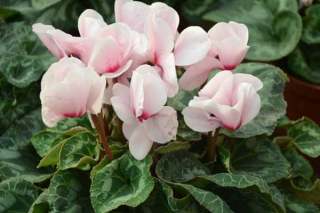
From my perspective as a Cyclamen tuber, the process begins not with your action, but with my natural cycle. I have just finished a magnificent display of flowering, and my leaves are beginning to yellow and wither. This is not a sign of distress, but a signal. I am entering my dormant period, a crucial time of rest where I draw my energy back into my core—my tuber. This is the only safe time for you to handle me. Disturbing me during my active growth or bloom would be a severe shock, wasting the precious energy I stored for my next performance. Wait until my foliage has mostly died back; this is my way of saying, "I am ready."
Please, handle me with care. Tipping the old pot on its side and gently easing me out is far preferable to a sharp pull on my stems, which can damage the connection points on my tuber's crown. Once I am free, observe my root system. My roots are fine and delicate. I would greatly appreciate it if you would gently loosen the old soil mix from around them, not with force, but with a soft, teasing motion. If you encounter any roots that are mushy, black, or smell unpleasant, these are no longer serving me. Their removal prevents rot from spreading to my healthy parts and allows me to focus my energy on establishing new, strong roots in my fresh environment.
The most vital step for my survival is how you position me in my new home. I am not a deep-rooted plant. My tuber has a top and a bottom. The top, where my growth points and any remaining stem scars are, must remain exposed above the soil line. Burying my entire tuber, especially my crown, is a death sentence. It creates a damp environment that invites rot and fungal diseases, which I am highly susceptible to. Place me in a pot that is only slightly larger than my root ball—a mansion-sized pot holds too much wet soil, which my roots cannot permeate quickly enough, leading to them sitting in water and drowning. Ensure the new pot has excellent drainage holes; my roots despise waterlogged conditions.
Surround my roots with a light, well-aerated, and well-draining potting mix. A blend designed for corms and tubers or a general mix amended with perlite or coarse sand is ideal. This new medium provides the perfect balance: it will hold enough moisture for my roots to absorb when I need it, but it will also allow excess water to drain away freely, preventing my tuber from sitting in dampness. After placing me in the pot with the correct soil level, gently fill in around my roots, tapping the pot to settle the mix without compacting it tightly. I need air pockets for my roots to breathe.
Once I am repotted, give me a thorough but gentle watering. This serves to settle the new soil around my roots and eliminate large air pockets. However, after this initial drink, I require a very different care routine. Place me in a cool, dimly lit location. This is not neglect; it is respecting my dormancy. I need this quiet, dry period to recover from the transplant shock and to begin initiating new root growth. Water me very sparingly during this time, only enough to prevent my tuber from shriveling completely. When you see new leaves beginning to emerge from my crown, you will know my rest is over and I am ready to grow again.