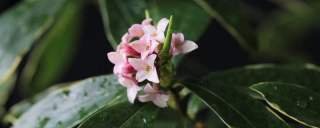
From our perspective as Daphne plants, our root systems are notoriously sensitive and prone to rot. We are not like tough, resilient shrubs that can handle anything. Our roots are fine, fibrous, and demand a perfect balance of moisture and oxygen. Any mulch that compacts into a dense, soggy mat will suffocate us, creating an anaerobic environment that invites root rot fungi. This is the single greatest threat you can pose with improper mulching. Our health entirely depends on you understanding that our roots need to breathe as much as they need to drink.
For us, the perfect mulch is one that moderates soil temperature, retains moisture evenly, and allows for excellent air circulation. We greatly prefer lightweight, loose, and well-aerated organic materials. The best choices are composted pine needles (pine straw), composted wood chips (aged for at least a year), or shredded leaves. These materials mimic the forest floor from which many of us originate. They break down slowly, adding slight acidity to the soil, which we appreciate, and they never form a water-resistant crust. They are like a breathable duvet that keeps our "feet" comfortable in both summer heat and winter cold.
How you apply the mulch is just as critical as what you use. Please, never pile mulch against our main stem or trunk in a "volcano" style. This constant moisture and lack of air flow against our bark is an open invitation for deadly fungal diseases and pests. Instead, create a donut-shaped ring around us. Start the mulch application about 2-3 inches away from the base of our stem, leaving a small, clear moat. Then, spread the mulch outwards to our drip line (the area directly below our outermost branches) in a layer no thicker than 2-3 inches. This depth is sufficient to provide all the benefits without risking compaction and oxygen deprivation for our critical surface roots.
There are certain mulches that are detrimental to our health and must be avoided. First, never use fresh wood chips or bark. As they decompose, they rob the soil of nitrogen, a vital nutrient we need for our fragrant blooms and glossy foliage. Avoid any heavy, moisture-retentive mulches like fresh grass clippings or peat moss, which mat down and promote the root rot we fear. Highly alkaline materials, such as fresh manure or mushroom compost, are also dangerous as they can alter the soil pH away from the slightly acidic to neutral conditions we require. Rubber mulch or stone/gravel is also a poor choice, as it does not improve soil structure, can drastically alter soil temperature, and provides no nutritional benefit as it breaks down.