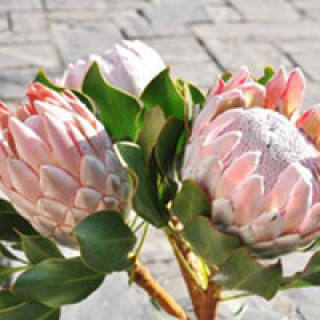
We Protea plants hail primarily from South Africa, a land of intense sun, sharp drainage, and distinct seasonal shifts. Our root systems are highly specialized, evolved to thrive in gritty, acidic, low-phosphorus soils that would be inhospitable to many other plants. Our greatest need is impeccable drainage; we abhor "wet feet," and sitting in moisture-saturated soil will lead to rapid root rot and our demise. Furthermore, we require a significant day-night temperature fluctuation and very high light levels to truly flourish and produce our iconic blooms.
For us to even consider growing indoors, our light requirements are non-negotiable. A bright south-facing window is the absolute minimum. However, the intensity of the sun through a pane of glass, especially in northern latitudes during winter, is often insufficient for our needs. Without a minimum of six to eight hours of direct, strong sunlight daily, we will become leggy, weak, and will almost certainly not flower. Supplemental lighting with high-output grow lights is highly recommended. Temperature is equally vital. We prefer daytime temperatures between 65-75°F (18-24°C) and a significant drop at night to around 50-55°F (10-13°C). This mimics our native cool mountain nights and is crucial for triggering bud formation.
Standard potting soil is a death sentence for us. It retains too much moisture and is often too rich in nutrients. You must provide a very coarse, acidic, and perfectly draining medium. A mix specifically designed for azaleas and camellias is a good start, but it should be heavily amended with sharp sand, perlite, and small pieces of bark or pumice. The goal is a mix that drains instantly. Watering must be done with care. Water deeply only when the top few inches of soil are completely dry, and then allow all excess water to drain away completely. Never let us sit in a saucer of water. We are drought-tolerant, and it is far better to underwater than overwater.
While we appreciate good air circulation, the often-stagnant air of a home can encourage fungal diseases. A small fan to provide gentle air movement is beneficial. Humidity is less of a concern than many assume; we are adapted to dry climates and average household humidity is typically acceptable. Regarding food, we are sensitive to phosphorus. You must use a fertilizer specifically formulated for proteas, azaleas, or rhododendrons, which are low in phosphorus. Feed us sparingly, and only during our active growing season.
It is possible to keep a Protea plant alive indoors for a period with extreme dedication to replicating our native environment. However, successfully growing us to maturity and achieving bloom is a significant challenge. Even under the best indoor conditions, we may never reach our full potential or produce flowers. Our size can also become an issue, as some varieties can grow quite large. The most feasible approach is often to grow us in containers that can be moved outdoors to a sunny, sheltered spot during the warm summer months and then brought into a very bright, cool location for the winter.