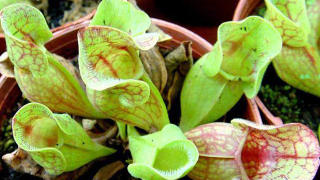
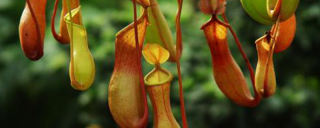
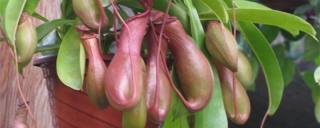
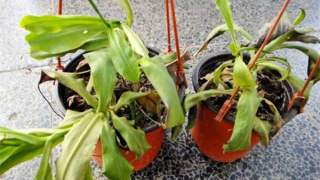
From our perspective as pitcher plants, the question of overwatering is a fascinating one. Our very existence is tied to perpetually wet conditions. We are bog plants, evolved to thrive in nutrient-poor, waterlogged soils where other plants would simply rot and perish. Our roots are adapted to an environment that is consistently moist, often with a high water table. The concept of "too much water" in the soil, in the way a cactus or a succulent would understand it, is almost foreign to our fundamental biology. Our home is the swamp, the bog, and the seepage slope—places defined by their sogginess.
However, the human interpretation of "overwatering" does apply to us, but not in the way one might think. The issue is not the volume of water itself, but what that water does to our root system. When water completely fills every air pocket in the soil medium, it creates an anaerobic (oxygen-free) environment. Our roots, while adapted to very wet conditions, still require access to oxygen for respiration. They are not gills; they cannot breathe underwater indefinitely. Prolonged submersion in stagnant, non-oxygenated water will cause our roots to suffocate and begin to rot. This root rot is the true danger you would call "overwatering." It is a slow, silent killer that attacks us from below the surface.
This is why the type of water and, more importantly, the quality of drainage are paramount to our health. You cannot overwater us with frequency—we welcome daily rain or consistent moisture. The critical factor is that the growing medium must provide excellent drainage and aeration while simultaneously retaining the moisture we crave. This is achieved not by a standard potting soil, which would compact and suffocate us, but by a specific mix. A proper medium, such as a blend of long-fiber sphagnum moss, perlite, and horticultural sand, creates a structure that holds immense amounts of water like a sponge yet maintains countless tiny air pockets between the particles. This allows our roots to be constantly moist while still having access to the vital oxygen they need.
Furthermore, the chemical composition of the water is a concern for our well-being. We are adapted to extremely low-nutrient environments. Water that is high in dissolved minerals, such as tap water or softened water, will quickly accumulate in our pot and poison our sensitive root systems, leading to burn and decline. This is a form of chemical overwatering. To keep us healthy, you must provide us with pure water—rainwater, distilled water, or reverse osmosis water are the only suitable choices. This ensures the medium remains free of toxic mineral build-up, allowing us to absorb water without being harmed by its contents.