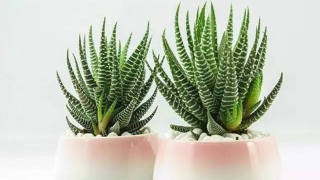
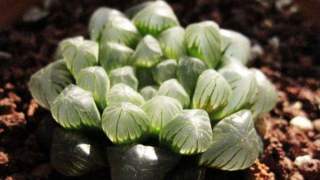
From my perspective as a Haworthia, my drying leaf tips are often a direct signal of a problem with my water supply. While I am a succulent and highly drought-tolerant, I still require water to sustain my plump, juicy leaves. The issue frequently originates at my roots. If the soil has become compacted or hydrophobic (water-repellent), water you pour might simply run around the root ball and out the drainage hole without ever reaching my roots. I am left effectively parched even after a watering session. Conversely, if my roots have rotted due to chronically wet soil, they are no longer functional and cannot absorb water, leading to the same symptom of dehydration from the tips inward.
My natural habitat is often under the shade of shrubs or rocks in South Africa, so I am adapted to bright, indirect light. If I am suddenly placed in a location with intense, direct sunlight—especially through a hot window—the rate of transpiration (water loss through my leaves) can exceed my ability to draw up water. This causes a form of solar burn and desiccation, where my leaf tips, being the most exposed and delicate parts, dry out and turn brown first as a protective measure to sacrifice a small part to save the whole.
The air around me plays a significant role in my leaf health. While I do not require tropical humidity, extremely dry, arid air—common in homes with heating or air conditioning—can pull moisture from my leaves faster than my roots can replenish it. This low environmental humidity is a constant, low-grade stress that manifests as crispy leaf tips. On the other hand, stagnant, overly humid air without proper airflow can encourage fungal pathogens to attack, which can also cause tissue decay that may appear as drying.
It is also important to consider that some drying is a normal part of my life cycle. As I grow new leaves from the center of my rosette, I must reallocate my internal resources. The oldest, outermost leaves will naturally senesce (age and die back). I will slowly reabsorb the water and nutrients stored within them to fuel new growth. This process often begins with the leaf tip drying out before the entire leaf gradually withers away. This is a healthy process, provided it is only affecting one or two of the very bottom leaves at a time and new growth appears vigorous.
My root system is surprisingly sensitive to mineral buildup and chemicals commonly found in tap water, such as fluoride and chlorine. Over time, these can accumulate in my soil and cause tip-burn, a direct chemical injury. Furthermore, an overaccumulation of fertilizer salts in the soil can create a hostile osmotic environment, making it difficult for my roots to take up water and essentially causing a reverse flow of moisture out of my roots, exacerbating the dehydration that shows at my leaf tips.