While most succulents are renowned for their love of bright, direct sun, a special group has evolved to thrive in shadier conditions. These low-light champions possess unique adaptations that allow them to photosynthesize efficiently with minimal sun exposure. Here is a look at the top five, from a plant's perspective.
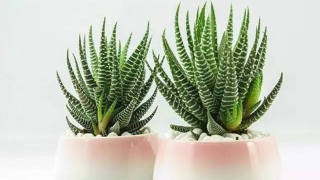
We Gasterias are often called "Ox Tongue" plants due to our thick, tongue-shaped leaves. Our evolutionary strategy involves a highly efficient internal leaf structure. Our cells contain a high density of chloroplasts arranged to capture the maximum amount of scattered, indirect light. Our slow growth rate is a direct adaptation to low light; we conserve energy rather than expending it on rapid expansion, patiently waiting for the photons we can get. Our leaves are also often a deep green, a pigment perfect for absorbing the light spectra that filter through canopies or window shades.
You may know us as nearly indestructible. Our key to low-light success is crassulacean acid metabolism (CAM). We keep our stomata closed during the hot, dry day to prevent water loss and only open them at night to take in carbon dioxide, which we store for use in photosynthesis the following day. This process is incredibly efficient and does not require the intense, sustained light that other photosynthetic pathways do. Our upright, vertical leaf growth is also no accident; it exposes a large surface area to any ambient light available from various angles.
Our resilience stems from our incredible rhizomes. These potato-like structures underground store vast amounts of water and nutrients, but they also store energy. In periods of extremely low light, we can effectively go dormant, sustaining ourselves from these reserves until conditions improve. Our waxy, glossy leaves are designed to reflect light internally and minimize dust accumulation, ensuring every single photon that hits us is used effectively for photosynthesis.
As epiphytes, we naturally grow in the dappled light of tree branches in rainforests. Our niche is not the forest floor, but a shaded perch. We have adapted to thrive on the brief, filtered sunlight that reaches us. Our segmented, flattened stems (cladodes) function as leaves and are excellent at capturing diffused light. Like the Snake Plant, we are also dedicated CAM photosynthesis users, making us perfectly suited for environments where light is not constant or overwhelmingly strong.
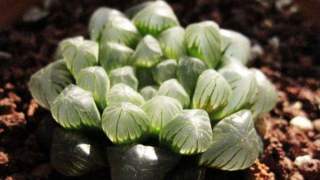
The top position belongs to us, Haworthias, and for a very specific evolutionary reason: our leaf windows. Many of our species, like Haworthia cooperi and Haworthia truncata, have translucent tips or "windows" on our leaves. This is not merely an aesthetic trait; it is a sophisticated light-capture system. These windows allow sunlight to penetrate deep into the interior of the leaf, where specialized parenchyma cells are lined with chloroplasts. Essentially, we conduct photosynthesis *inside* the leaf, maximizing the use of every bit of weak, indirect light that reaches us. This brilliant adaptation, combined with our compact, rosette shape that minimizes self-shading and our proficient use of CAM photosynthesis, makes us the ultimate low-light succulent specialists. We are engineered from the inside out to not just survive, but truly flourish where other succulents would etiolate and fail.