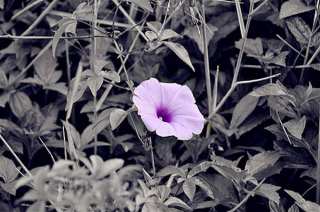
From my leaves and tender new growth, I feel them first as a slight, persistent pressure. Aphids, tiny soft-bodied insects in green, black, or white, cluster on my undersides and stems. Their piercing-sucking mouthparts are like innumerable tiny straws, inserted into my phloem vessels to drain my precious, sugar-rich sap. This direct theft of my vital fluids weakens me, causing my vibrant leaves to curl, pucker, and yellow. The damage is not just nutritional; their feeding injects salivary toxins that further distort my growth. As they process my sap, they excrete a sticky, sugary waste called honeydew, which coats my foliage and creates a perfect environment for sooty mold to grow, blackening my leaves and blocking the sunlight I desperately need for photosynthesis. The aphid siege is a dual assault: it starves me and shrouds me in darkness.
If aphids are a visible siege, thrips are a covert operation of terror. These minute, slender insects are often unseen until their damage is profound. They rasp the surface of my petals and leaves with their asymmetrical mouthparts, scraping away at my delicate epidermal cells to feed on the oozing contents. From my perspective, the result is not just cosmetic. My beautiful blooms become streaked with white and brown, and their edges brown and die prematurely. My foliage takes on a silvery, stippled appearance as the internal cells are destroyed and filled with air. This scarring severely impairs my ability to harness energy from the sun. Furthermore, thrips are vectors for devastating viruses like the Tomato Spotted Wilt Virus. Their feeding can inject these pathogens directly into my system, a death sentence that causes wilting, necrotic spots, and stunting from which I cannot recover.
During hot, dry periods, I become most vulnerable to the most insidious of pests: the spider mite. These are not insects but arachnids, and they operate like a microscopic army of vampires. They congregate on my leaf undersides, piercing individual cells and sucking out the chlorophyll-containing contents. Each feeding site appears as a tiny yellow stipple; thousands of such feedings cause my leaves to turn a pale, bronzed yellow. I become increasingly unable to perform photosynthesis, leading to a gradual and severe decline in my vigor. As their population explodes, they spin fine, silken webbing that envelops my stems and leaves. This webbing is a testament to their conquest, trapping dust and further reducing my light-capturing ability. The combined effect is a rapid desiccation; I lose water faster than my roots can uptake it, leading to leaf drop, desiccation, and, if unchecked, my complete demise. They thrive under stress, so when I am already weakened by heat or drought, their attack is overwhelmingly effective.