Maternal love, happiness, greedy heart, bitterness, sadness, fantasy.
Many Hakkas regard Lu Binghua as "Hakka mother flower", representing ordinary beauty and sadness.
Of course, some people say that the reason why the flower language is bitter is that the living environment is relatively poor. Others say that it is the seed itself, which looks very painful.
People blessed by this kind of flowers are considered as "dogs can't spit Ivory out of their mouths". They like to tell the truth, don't understand the color and the occasion. This kind of straightforward character needs to be changed. Otherwise, in the eyes of others, it will not be able to deal with affairs and suffer from boredom.
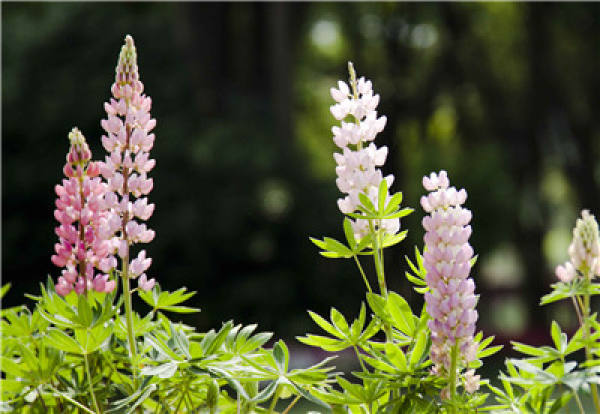
In fact, Lu Binghua is a transliterated name. Its big name is lupin bean.
Lupin is widely planted in tea plantations in Taiwan, China, because its root system has the function of fertilizer fixation. It can be said that the tea tree provides sufficient nitrogen fertilizer. It is affectionately called mother flower by local people, and this transliteration refers to "Roadside Flower" in Hakka, lubenfa.

Since ancient times, Christianity has the habit of connecting saints with specific flowers, because in the past few years, saints often decorate the altar with blooming flowers. In the middle ages, Catholic monasteries planted a variety of flowers like horticultural centers. Over time, the Church combined 366 flowers with different saints. Every day is a fresh flower, which formed the so-called calendar.
Lupins are the flowers chosen to sacrifice the fifth century bishop of caltago, Saint Augustus.