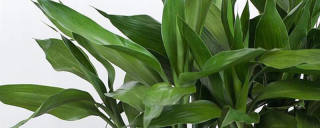
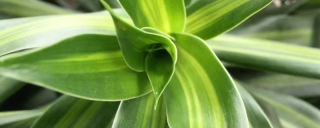
From my perspective as a Lucky Bamboo plant, I must clarify a botanical fact: I am not a true bamboo. I am a *Dracaena sanderiana*, a member of the asparagus family. This is crucial for your success. My stems are not hollow like true bamboos; they are solid and store energy and water. The key to my propagation lies in the nodes. Those ring-like bands you see encircling my stems are not merely decorative; they are hubs of potential life. Each node contains a dormant bud, capable of awakening to produce new roots and shoots when given the correct signals. Your cuttings must include at least one of these nodes, as it is the command center for new growth.
When you decide to take a cutting, please be precise and gentle. Use a sharp, sterile blade—a clean, swift cut minimizes damage to my tissues and reduces the risk of infection. You can cut a healthy stem section that is at least 4-6 inches long, ensuring it has one or two nodes. Alternatively, if you are propagating an offshoot (a "pup") that has emerged from my base, you can carefully separate it from the mother plant, ideally ensuring it has some roots of its own already. This is a traumatic event for me, a controlled wound. My response to this injury is what you are counting on to create a new, independent individual.
I can root in either water or soil, and my needs differ slightly for each. My preference is often for clean, fresh water initially, as it allows you to monitor my progress.
Water Propagation: Place my cut end into a container of distilled or filtered water. Tap water often contains chlorine and fluoride, which can cause my leaf tips to brown and may hinder root development. The water should cover the node from which the roots will emerge, but do not submerge my leaves. Change the water every week to keep it oxygenated and free from bacteria that could cause my stem to rot.
Soil Propagation: You may also plant my cutting directly into a well-draining potting mix. A blend designed for cacti or succulents is ideal, as it prevents water from pooling around my vulnerable cut end. Moisten the soil lightly before planting, and then place me in a spot with bright, indirect light. The soil should be kept slightly moist but never soggy. This method requires me to work harder initially, but it often leads to a stronger, more established root system.
After the cutting is placed in its medium, my internal biological processes begin. The cut I sustained triggers a hormonal response. Auxins, my growth hormones, mobilize and travel to the wounded site and the node. Their job is to stimulate the formation of adventitious roots—roots that grow from non-root tissue, like my stem. You will first see small, white, bumpy protrusions from the node. These will slowly elongate into fine, white roots. Simultaneously, the dormant bud on the node may begin to swell and produce a new green shoot. This is a sign of successful establishment. Please be patient; this process can take several weeks.
To support this energy-intensive process, I require the right environment. Place me in a location with bright, indirect sunlight. Direct, harsh sun will scorch my leaves, especially when I am vulnerable and focusing my energy on root production. I thrive in warm temperatures, ideally between 65°F and 90°F (18°C and 32°C). Avoid drafts from air conditioners or heaters, as sudden temperature fluctuations can cause me stress. Your patience is my greatest resource. Do not tug on my cutting to check for roots, as this can damage the delicate new formations. Trust that I am working beneath the surface to build a foundation for a long and prosperous life.