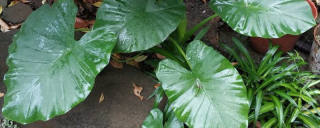
To understand the effects of misting, you must first consider my origins. I am an Alocasia, a child of the humid, dappled-light understory of tropical rainforests. In this environment, the air is thick with moisture, often reaching 60-80% humidity. My large, elegant leaves are not just for show; they are sophisticated organs for transpiration and photosynthesis. The stomata, tiny pores primarily on the underside of my leaves, are crucial for gas exchange. They open to take in carbon dioxide but in doing so, they also lose water vapor to the atmosphere. When the air around me is dry, this water loss accelerates, potentially stressing my system.
From my leafy viewpoint, a fine mist settling on my surface can offer a temporary respite. The immediate sensation is one of localized relief. The micro-climate directly around my leaves becomes more humid for a short while, which can slow the rate of water loss through my stomata. This is particularly welcome if I am situated in a dry room with air conditioning or heating, which saps moisture from the air. Furthermore, a light misting can help keep my stomata clean and free from fine dust particles that might otherwise clog them. Clear stomata mean more efficient breathing, which supports robust growth. It also provides a moment for you, my caretaker, to inspect me closely for early signs of pests like spider mites, which despise humid conditions.
However, misting is not a simple cure-all and carries several risks that can harm me. The most dangerous consequence is the promotion of fungal and bacterial diseases. If water droplets bead up and remain standing in the crevices where my leaf stems (petioles) join the main trunk, or if they linger on the velvety texture of some of my varieties, they create a perfect, damp environment for pathogens to thrive. This can lead to leaf spot, crown rot, or other infections that can be fatal. Unlike in my native rainforest, where there is constant air movement to evaporate moisture, the still air of a home allows water to sit for too long.
Another drawback is the fleeting nature of the benefit. The humidity spike from misting lasts only a few minutes before dissipating. It does not address the underlying issue of consistently low ambient humidity. For me, stable conditions are far healthier than brief, dramatic fluctuations. Moreover, if the water used for misting is hard or contains high levels of minerals and chlorine, it can leave unsightly white spots or residues on my beautiful leaves, potentially blocking light and interfering with photosynthesis.
If your goal is to replicate the humid conditions I crave, there are more effective and safer methods than misting. Placing my pot on a pebble tray filled with water is an excellent solution. As the water evaporates, it creates a consistent halo of humidity around me without ever wetting my leaves or soil. Grouping me with other plants is another fantastic strategy. We create our own microclimate through collective transpiration, raising the humidity for the entire group. For the ultimate solution, especially in persistently dry homes, using a humidifier provides the stable, elevated humidity levels that truly allow me to thrive, mimicking the steady atmosphere of my natural home.