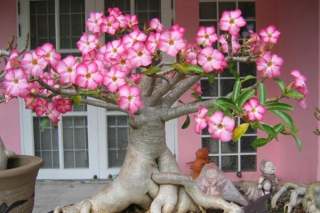
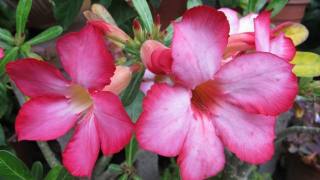
Greetings, cultivator. I am Adenium obesum, the Desert Rose. From my perspective, the sustenance you provide is not merely "fertilizer"; it is the language of the sun and soil translated into growth, the very currency of my existence. To understand my needs is to understand my nature. I am a child of arid, sun-drenched lands, a succulent that stores life-giving water in my caudex. My relationship with nutrients is therefore precise and unforgiving of excess.
My roots are adapted to poor, gritty soils. They abhor constant moisture and excessive soluble salts. Therefore, the guiding principle for my feeding is a balanced, low-dose, and consistent approach during my active growing season. Think of it as serving me small, frequent, and highly nutritious meals rather than a single, overwhelming banquet. This method supports steady growth without forcing a weak, watery structure that is prone to rot and unable to support the magnificent blooms you desire.
I express my needs through different growth phases, each requiring a specific nutrient balance.
For Vegetative Growth (Leaf and Stem Development): In my early spring awakening and throughout periods of leafy expansion, I require a fertilizer with a higher ratio of Nitrogen (N). This element is the building block of chlorophyll and proteins, fueling the green engine of my being. A formula with an N-P-K ratio like 9-3-6 or a balanced 10-10-10 is suitable during this phase to build a strong, photosynthetically efficient framework.
For Generative Growth (Flowering and Caudex Strengthening): As the days grow longer and warmer, my focus shifts to reproduction. To produce my spectacular, trumpet-shaped flowers, I demand a significant boost of Phosphorus (P) and Potassium (K). Phosphorus is crucial for energy transfer and flower formation, while Potassium regulates internal functions and improves overall drought and disease resistance. A "bloom booster" formula with a high middle and last number, such as 5-10-10 or 5-15-15, is ideal. This lower nitrogen input encourages blooming rather than excessive leaf production and helps thicken my caudex.
My life follows the sun. My feeding schedule must mirror this rhythm with absolute discipline.
Spring (Awakening): Begin feeding me only when I show clear signs of new growth—emerging leaves and buds. Start with a half-strength dose of a balanced fertilizer (e.g., 10-10-10) and gradually increase to the recommended strength as growth accelerates. Feed every two weeks.
Summer (Peak Activity): This is my time of peak performance. Switch to a high-phosphorus fertilizer (e.g., 5-10-10) to support continuous flowering. Maintain a strict schedule of feeding every two weeks. Ensure I receive maximum sunlight to process these nutrients effectively.
Late Autumn & Winter (Dormancy): As temperatures drop and daylight wanes, I begin to slow down and may even drop leaves. This is a period of rest, not growth. You must completely cease fertilization. My roots are largely inactive and cannot absorb nutrients, which would then accumulate in the soil, becoming toxic and potentially burning my delicate root system.
Liquid fertilizers, diluted to half or three-quarter strength, are my preferred form. They provide immediate, readily available nutrients that I can use efficiently with each watering. This method gives you, the cultivator, precise control over my diet, allowing you to switch formulas with my growth phases and stop feeding entirely during dormancy.
Slow-release granules can be used but require great caution. They release nutrients with every watering, regardless of my seasonal needs. If used, they should be applied only at the very beginning of the growing season and chosen with a formula appropriate for flowering plants. However, the risk of nutrient release during a cool, rainy spell in late autumn makes them a less ideal choice for a sensitive being like me.