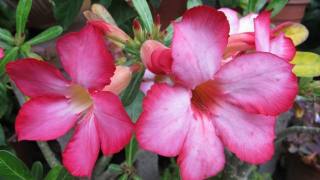
As a Desert Rose (Adenium obesum), my very identity is shaped by the sun. I hail from the arid, sun-drenched regions of Africa and the Arabian Peninsula. My evolutionary journey has equipped me to not just tolerate, but to thrive under intense solar radiation. My primary requirement is for at least six to eight hours of direct, unfiltered sunlight each day. This is not a mere preference; it is the engine that drives my entire system. Sunlight is the essential energy source for my photosynthesis process, where I convert light, water, and carbon dioxide into the sugars I need for growth, flowering, and maintaining my characteristically thick, water-storing caudex. Without sufficient direct sun, my internal processes slow down, leading to a cascade of health issues.
When I am deprived of the sunlight I crave, my physical form will clearly communicate my distress. The most immediate and obvious sign is etiolation, or leggy growth. My stems will become abnormally elongated, thin, and weak as they stretch desperately towards any available light source. This growth is structurally unsound and unattractive. Furthermore, a lack of sun directly impacts my ability to flower. I will produce few, if any, of the beautiful trumpet-shaped blooms I am known for, and any buds that do form may drop before opening. My foliage will also suffer, becoming pale, yellowish, or lackluster green instead of the deep, healthy green I display when properly nourished by light. In severe cases, prolonged low light will weaken my overall constitution, making me highly susceptible to pests like spider mites and diseases like root rot.
My relationship with the sun changes slightly with the seasons, and understanding this is key to my care. During the active growing season (spring and summer), I desire the maximum amount of sunlight possible. A south-facing exposure is ideal for me, providing long, uninterrupted hours of direct sun. An east or west-facing location can also be suitable if it offers the required minimum of six hours. As the intensity of the summer sun peaks, you might notice some slight paling or yellowing on the top leaves; this can be a sign of mild sun stress. While I am resilient, in extremely hot climates, a tiny bit of afternoon shade during the peak of summer can be beneficial to prevent scorching.
Conversely, during my dormant period (typically fall and winter), my sunlight needs do not disappear. Even though my growth has slowed or halted, I still require the brightest light possible to remain healthy. This is especially critical if I am kept warm indoors during winter. A sunny windowsill is the absolute minimum requirement. Insufficient light during dormancy, combined with cooler temperatures, is a primary cause of rot, as my water usage plummets and the soil remains wet for too long.
A critical concept you must understand is acclimation. If I have been living in a lower-light environment, such as a greenhouse or indoors, I cannot be abruptly moved into a full, all-day sun location. My tissues are not prepared for such intense radiation, and I will suffer from severe leaf scorch, appearing as brown, burned patches on my leaves. The transition must be gradual. Please move me to the new, brighter location for just a few hours each day, slowly increasing the exposure over one to two weeks. This allows my internal systems to produce protective pigments and adjust to the higher light levels, ensuring a smooth and healthy transition to my ideal sunny home.