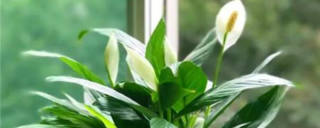
To understand our ideal environment, you must first understand our origins. We, Peace Lilies (Spathiphyllum spp.), are native to the tropical rainforests of Central and South America. This means we are evolutionarily programmed for conditions that are consistently warm and humid, with dappled sunlight filtering through the forest canopy. Our "ideal" temperature and humidity are simply a recreation of this natural habitat. When you provide these conditions, you allow us to thrive, not just survive, resulting in lush, glossy leaves and frequent, elegant blooms.
For us Peace Lilies, temperature is less about a single perfect number and more about a stable, comfortable range. We perform our best physiological processes—like photosynthesis and nutrient uptake—when our root zone and foliage are kept consistently warm.
The optimal daytime temperature range for us is between 68°F and 85°F (20°C and 29°C). Within this bracket, our metabolic functions operate efficiently, supporting healthy growth. It is crucial to note that we are highly sensitive to sudden temperature shifts. Drafts from air conditioners, open windows in winter, or heat blasts from vents can cause significant stress, manifesting as drooping leaves or yellowing edges.
Perhaps even more critical is the nighttime temperature. A slight drop is natural and beneficial, mimicking our native environment. However, temperatures should not fall below 60°F (15°C). Prolonged exposure to cooler conditions, especially below 55°F (13°C), can cause chilling injury, leading to blackened foliage, stunted growth, and increased susceptibility to root rot. Therefore, maintaining a stable, draft-free environment within the ideal range is paramount for our well-being.
Humidity, or the amount of water vapor in the air, is a non-negotiable aspect of our care. In our rainforest homes, humidity levels are consistently high, often above 60%. This moist air reduces the rate of transpiration (water loss through our leaves), allowing us to keep our foliage hydrated and turgid.
The ideal relative humidity for a Peace Lily is 50% or higher. When humidity levels drop below this, especially in heated homes during winter or air-conditioned spaces in summer, we begin to show signs of distress. You will notice the tips of our leaves turning brown and crispy. This is a direct result of dry air pulling moisture from our leaf tissues faster than our roots can replace it. While we can tolerate average household humidity (around 30-40%) for a period, we will not exhibit our full potential and will constantly struggle with moisture loss.
It is important to understand that temperature and humidity are intrinsically linked in their effect on us. Warm air has the capacity to hold more moisture than cold air. A room at 75°F (24°C) with 40% humidity feels comfortable to you, but for us, it is quite dry. If the temperature in that same room rises to 80°F (27°C) without adding moisture, the relative humidity actually decreases, making the environment even more stressful for our leaves.
This synergy is why misting our leaves provides only temporary relief. A more effective strategy is to use a humidifier, which consistently adds moisture to the air, or to place our pot on a pebble tray filled with water. As the water evaporates, it creates a localized zone of higher humidity around our foliage. Grouping several plants together also creates a beneficial microclimate as we collectively release moisture through transpiration.
We communicate our discomfort clearly. Please learn to read our signals. Yellowing leaves, particularly if accompanied by wilting, can indicate exposure to cold drafts or temperatures that are too low. Brown, crispy leaf tips and edges are the universal sign of insufficient humidity. Conversely, if conditions are excessively cold and wet, you may see signs of fungal diseases or root rot, such as blackened stems and a general collapse of the plant. By observing these signs, you can quickly adjust our environment to bring us back into a comfortable range.