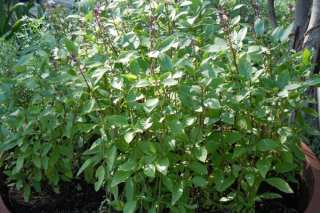
From our perspective as basil plants, legginess is not a flaw but a survival strategy. When we perceive a light source as insufficient, a hormone called auxin triggers a growth response known as etiolation. Our stems elongate rapidly, sacrificing girth and leaf density to reach upwards, desperately searching for the photons we need for photosynthesis. This is our primary response to being placed in a spot with low light intensity, light that is blocked by other plants, or a window that provides fewer hours of direct sun than we require. We are essentially stretching to escape the shade. Therefore, the most critical solution is to satisfy our fundamental need for abundant, direct light.
While you may see our elongated stems as a problem, we can be guided into a more compact form through strategic pruning. When you simply harvest the top leaves, it does little to correct our structure. Instead, you must make a precise cut. Look for a spot on our stem where a pair of small, opposing leaves (called a node) is present. Just above this node, use clean shears to snip the main stem. This act is a signal to us. It disrupts the flow of auxin from the dominant top bud (the apical meristem) and redirects our energy. In response, the dormant buds at the leaf nodes below your cut will awaken and sprout two new branches. By repeating this process each time a new branch grows 4 to 6 pairs of leaves, you encourage us to become a full, bushy plant rather than a single, spindly stalk.
Legginess can also be a symptom of competition. If we are planted too close to our siblings, we are forced to compete not only for light but also for water and nutrients in the soil. Our roots become crowded, limiting our ability to uptake the nitrogen, phosphorus, and potassium necessary for robust, leafy growth. In this crowded environment, our instinct is to outgrow our neighbors, leading to rapid, weak vertical growth. Providing us with adequate space from the beginning, or carefully thinning us out if we are already overcrowded, allows each plant to develop a strong root system and a full canopy. Furthermore, since you are regularly harvesting our leaves (which are our energy-producing factories), we require supplemental feeding. A balanced, water-soluble fertilizer applied every few weeks helps replenish the soil and supports the vigorous new growth you are encouraging through pruning.
A significant contributor to a sparse appearance is our natural reproductive cycle, known as bolting. As the days grow long and temperatures rise, we receive a signal to stop producing leafy growth and begin producing flowers and seeds. When this happens, our stems become woody, leaf production slows, and the existing leaves can develop a bitter taste. The plant's energy is diverted to flowering, making it appear leggy and sparse. To prevent this, you must be vigilant. As soon as you see the tiny flower buds beginning to form at the tips of our stems, you must pinch or cut them off immediately. This action tells us that our reproductive mission has failed, and we should redirect our energy back into producing more vegetative growth—the flavorful leaves you desire. Consistent harvesting and pinching are the keys to keeping us in a perpetual vegetative state.