From our perspective, the soil is not just a place to anchor our roots; it is our entire source of sustenance. Unlike most plants you are familiar with, we carnivorous plants did not evolve in rich, fertile soils. We hail from harsh, waterlogged environments like bogs and seepage slopes where the soil is acidic and critically low in essential nutrients, particularly nitrogen. This nutrient poverty is the very reason we developed our dramatic trapping mechanisms—to get our nutrients from insects instead of the ground. When you plant us in standard potting soil, compost, or fertilizer, you are essentially force-feeding us a toxic overload of minerals. Our roots, adapted for nutrient-scarce conditions, cannot regulate this influx. The salts and minerals burn our delicate root systems, leading to our slow, painful demise. For us, poor soil equals life; rich soil equals death.
To truly thrive with us, you must replicate our native conditions. Our ideal soil mix must fulfill three non-negotiable criteria: it must be nutrient-free, well-draining yet moisture-retentive, and acidic. A perfect home for us is a simple blend of two to three ingredients. Sphagnum peat moss forms the base; it is acidic, holds moisture superbly, and is devoid of any nutrients. It recreates the spongy, organic mat of our natural bog habitats. The second key component is horticultural sand or perlite. Please ensure the sand is sharp, coarse, and washed (like pool filter sand), not beach sand which is full of harmful salts. The perlite or sand does not hold water or nutrients; its sole purpose is to create air pockets within the peat, preventing compaction and ensuring our roots have access to oxygen. Without this aeration, the mix would become waterlogged and anaerobic, causing our roots to rot.
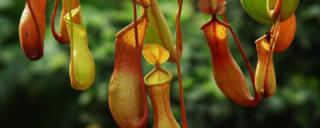
While the peat-and-sand base is a great starting point, some of us have more specific preferences honed by our unique evolutionary paths. For instance, we Venus flytraps, along with many Sundews and North American Pitcher Plants, are perfectly content in a 1:1 ratio of sphagnum peat moss to perlite/sand. This mix provides the low-nutrient, acidic, and moist environment we require. However, for our cousins the Heliamphora (Sun Pitchers) and some Nepenthes (Tropical Pitchers) who often grow in less peaty, more aerial environments, a more open and durable mix is preferred. A blend of long-fibered sphagnum moss and perlite (or orchid bark) in a 1:1 ratio is ideal. The long-fibered moss provides structure, excellent moisture retention, and slight acidity, while allowing for superb airflow around the roots, mimicking the loose, mossy substrates we cling to in the wild.
Even with the perfect soil mix, your care is not complete. The water you use is as critical as the soil itself. Tap water in most parts of the United States contains dissolved minerals (like calcium and magnesium) that will quickly accumulate in our soil, poisoning us just as effectively as fertilized potting mix. From our root's point of view, every watering with tap water is another dose of toxins. You must provide us with water that has a low mineral content, below 50 parts per million (ppm). The safest options are rainwater, distilled water, or water purified by reverse osmosis. This ensures that the nutrient-free sanctuary you have created with your soil mix remains pure, allowing us to absorb water without the fear of mineral poisoning.