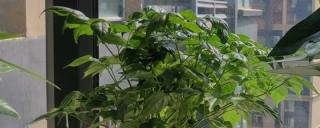
The term "Emerald Tree" is not a precise botanical name but a common name used in horticulture, often referring to plants with vibrant green, tree-like forms. From a botanical perspective, this typically encompasses several distinct species across different genera, each with unique morphological and physiological characteristics. Understanding these varieties requires examining their taxonomy, foliage, growth habits, and ideal cultivation conditions.
Perhaps the most accurately named is a specific cultivar of the Cider Gum, *Eucalyptus gunnii* 'Azura'. Botanically, this is a hardy, compact cultivar prized for its stunning, rounded juvenile foliage that is a distinct blue-green or "emerald" hue. The leaves are sessile (lacking a petiole), opposite, and orbicular, densely covering the stems. As a member of the Myrtaceae family, it possesses oil glands in its leaves, releasing a characteristic aroma when crushed. 'Azura' is a fast-growing, evergreen tree that remains relatively small, making it suitable for gardens. Its "emerald" quality refers not just to color but also to its year-round persistent foliage, a key adaptation for continuous photosynthesis in its native Australian environment.
While not a tree in the true sense, the Emerald Ripple Pepper is frequently sold as a small, ornamental "tree" due to its bushy, upright habit. Botanically, it is a herbaceous perennial from the Piperaceae family. Its key feature is its deeply corrugated (caperata) heart-shaped leaves, which exhibit a rich, glossy emerald green color. The plant's metabolism is adapted for low-light understory environments, utilizing a form of photosynthesis that is efficient in conserving water. The "tree" form is often achieved by allowing the plant to grow densely from a central rootstock. Its inflorescence is a characteristic rat-tail-like spike, typical of the *Peperomia* genus, which is distinct from the showy flowers of flowering trees.
This variety is a cultivar of *Euonymus fortunei*, a woody evergreen vine or shrub in the Celastraceae family. 'Emerald Gaiety' is primarily grown as a mounding shrub that can be pruned to a small, tree-like standard. Its botanical interest lies in its variegated foliage: the leaves are dark emerald green in the center with an irregular white margin. This variegation is a chimeral mutation, where layers of the plant tissue have different genetic makeup affecting chlorophyll production. As a woody plant, it exhibits secondary growth, developing a true trunk and branches over time, which supports its classification as a small tree. It is dioecious, meaning individual plants are either male or female.
This plant is a cultivar of the Eastern White Cedar, a conifer in the Cupressaceae family. The cultivar name 'Smaragd' is Danish for "emerald," directly referencing its bright, evergreen foliage that maintains its color throughout winter. Botanically, it is a narrow, pyramidal tree with scale-like leaves arranged in flattened sprays. Unlike broadleaf trees, it reproduces via cones (strobili). Its dense, columnar growth habit is a result of its strong apical dominance and short internodes. The foliage contains aromatic oils, and its resilience to cold temperatures makes it a popular choice for temperate landscapes, representing an "emerald tree" that provides color during dormant seasons.