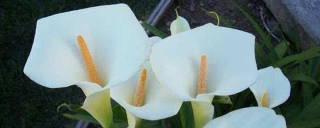
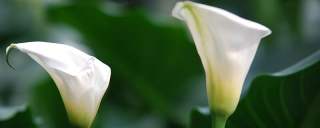
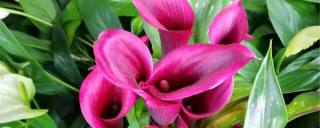
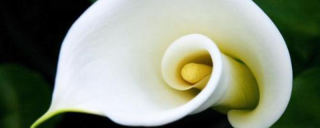
From my perspective as a Calla Lily, my primary purpose is to reproduce. The beautiful, trumpet-shaped spathe that you admire is not actually my flower; it is a specialized leaf, or bract, designed to protect and showcase the true flowers, which are the tiny structures on the central spike, called the spadix. Once the spadix has been successfully pollinated, my energy shifts dramatically. My biological imperative is no longer to attract pollinators with a vibrant spathe but to develop seeds. I will begin diverting a significant portion of my stored energy—sugars, nutrients, and water—into the seed pods that form at the base of the fading spathe. This process, while crucial for my species' survival, comes at a cost. It signals to the rest of my system that the reproductive work for this stem is complete, reducing the incentive to produce new bloom stalks.
When you deadhead me, you are essentially intercepting a critical command in my lifecycle. By carefully removing the spent flower stalk down to its base, you are preventing the formation of seed pods. From my point of view, this is a significant event. The hormonal signals that were shouting "divert energy to seed production!" are suddenly silenced. My system registers that the initial attempt at reproduction on that particular stalk has failed. This "failure" is not a negative event for me; instead, it triggers a survival response. I must try again. The energy that would have been wasted on producing seeds for a single stalk is now conserved and available for other purposes.
The conserved energy is not lost; it is strategically reallocated. This is the core benefit of deadheading from my physiological standpoint. The nutrients and carbohydrates are redirected to two key areas: my rhizome (or bulb) underground and the potential for new growth. My rhizome is my lifeline, my battery pack. By sending energy down to this storage organ, I am strengthening myself for the long term. A larger, healthier rhizome means I have more resources to draw upon for the next growing season, resulting in more robust foliage and, crucially, more flower stalks. Simultaneously, the available energy can stimulate the production of new stalks from the base of my plant. Instead of one cycle of blooms, I may be able to initiate a second, and sometimes even a third, flush of flowers to try once more for successful reproduction.
How you perform the deadheading is important for my well-being. A ragged tear from snapping the stem can create an open wound that is susceptible to bacterial or fungal infections, which can travel down the stem and affect my entire structure. Please use sharp, clean pruning shears or scissors. Locate the base of the flower stalk where it emerges from the cluster of spear-like leaves. Make a clean, angled cut as close to this base as possible without damaging the surrounding foliage. The leaves are my solar panels, and I need them to be fully functional to convert sunlight into the energy we are trying to conserve. Do not remove the leaves until they have naturally yellowed and died back, as they are still feeding me.
As the growing season wanes and daylight hours shorten, my focus will naturally shift from blooming to preparing for dormancy. If you leave a few spent flowers on the plant late in the season, I may be allowed to form seed pods. This is not necessarily detrimental. For me, it is a natural conclusion to my annual cycle. However, if your goal is to encourage me to put the very last of my energy into bulking up my rhizome for an even better display next year, you should continue deadheading until the foliage begins to yellow. At that point, my above-ground growth is no longer productive, and I am fully reliant on the stored energy in my rhizome to survive the winter and emerge again in the spring.