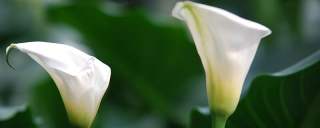
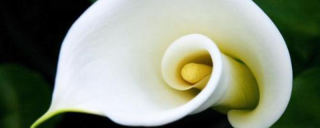
From a botanical perspective, the answer is a definitive no. Calla lilies are not true lilies. This common point of confusion arises from the use of the word "lily" in their everyday name, a frequent occurrence in horticulture where plants are named for their visual resemblance rather than their genetic lineage. The true identity of the calla lily lies in a completely different plant family, making it only distantly related to the plants classified as true lilies by botanists.
To understand the distinction, we must first define what a true lily is. True lilies belong to the genus Lilium within the family Liliaceae. This genus comprises approximately 100 species, including well-known plants like the Easter Lily (Lilium longiflorum), Tiger Lily (Lilium lancifolium), and Asiatic and Oriental hybrids. Key botanical characteristics of true lilies include a large, central flower with six tepals (petals and sepals that look identical), prominent anthers that produce often copious amounts of pollen, and a growth habit that typically emerges from a bulb composed of fleshy, overlapping scales. Their leaves are usually arranged in whorls or spirals up the stem.
The plant commonly known as the calla lily is scientifically classified as Zantedeschia aethiopica and belongs to the family Araceae, the arum or aroid family. This places it in a completely different evolutionary branch of the plant kingdom. The most significant difference lies in the flower structure. What appears to be a single, large, trumpet-shaped petal on a calla lily is not a petal at all. It is a specialized leaf called a spathe. The spathe's function is to surround and protect the actual flowers, which are tiny and arranged in a cylindrical structure called a spadix (the yellow protrusion in the center of the white spathe). This spathe-and-spadix structure is the defining characteristic of the Araceae family, which also includes peace lilies, jack-in-the-pulpit, and philodendrons. Furthermore, calla lilies grow from a rhizome, which is a modified underground stem, not a true bulb composed of scales like a Lilium.
The physical differences between the two groups are stark when examined closely. The "flower" of a true lily (Lilium) is radially symmetric with six distinct tepals and separate reproductive parts (anthers and stigma) clearly visible within the bloom. In contrast, the "flower" of a calla lily (Zantedeschia) is the entire inflorescence: the showy, often asymmetrical spathe wrapped around the central spadix. The true flowers are the minuscule structures on the spadix. The growth structures also differ fundamentally: bulbs with scales for true lilies versus rhizomes or tubers for calla lilies.
Understanding this botanical distinction is more than an academic exercise; it has practical implications for cultivation and safety. True lilies from the genus Lilium are extremely toxic to cats, causing acute kidney failure even from ingestion of small amounts of pollen or leaves. Calla lilies (Zantedeschia), while containing calcium oxalate crystals that can cause irritation to the mouth and gastrointestinal tract in pets and humans, are not associated with the same specific, lethal renal toxicity as true lilies. Their care requirements also differ, with many Zantedeschia hybrids preferring different soil moisture and sun exposure compared to various Lilium species.