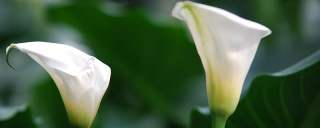
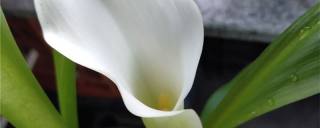
From our perspective as Calla Lilies (*Zantedeschia* spp.), timing is everything. We do not appreciate being disturbed during our active growth and blooming phase, as this disrupts our energy production and can lead to significant stress. The ideal time to divide our rhizomes is after our foliage has begun to yellow and die back. This typically occurs in late summer or early autumn, after we have finished flowering. This die-back is not a sign of illness; it is our natural signal that we are entering a period of dormancy. Our energy, which was stored in our leaves, is now being withdrawn and consolidated into our underground rhizomes. Disturbing us at this point is minimally disruptive, as we are already preparing for a rest. Alternatively, if you live in a climate where our rhizomes must be dug up for winter storage, division can also be performed in early spring before new growth emerges.
To begin, please water the soil around us lightly a day before the operation to make it more pliable. Then, using a garden fork or spade, carefully dig a wide circle around the main clump, ensuring you are a generous distance from the center to avoid slicing through our outer rhizomes. Gently lift the entire root mass from the soil. You will now see a tangled network of rhizomes—these are our modified stems that store nutrients for the next growing season. Lay the clump on a tarp or newspaper and gently wash away the soil with a gentle spray of water. This allows you to see our structure clearly and identify natural divisions.
Now, inspect us closely. A healthy rhizome will be firm and have at least one, but preferably several, growth points or "eyes." These eyes are small, pointed buds from which next season's shoots will emerge. Using your hands, you can often gently tease apart younger, smaller rhizomes from the main mother rhizome. For tougher, more mature sections, a sharp, clean knife is necessary. Sterilize the blade with a solution of one part bleach to nine parts water to prevent the introduction of pathogens. Make clean cuts, ensuring that each new division has a substantial piece of rhizome attached to at least one or two healthy eyes. Discard any sections that are soft, mushy, or show signs of rot.
Immediately replanting a freshly cut rhizome can be risky, as the wound is an open invitation to soil-borne fungi and bacteria. To prevent this, we need a short period to cure. Place the newly divided rhizomes in a warm, dry, and airy location out of direct sunlight for one to three days. This allows the cut surfaces to callous over, forming a natural protective barrier. You will know the process is complete when the cut ends feel dry and sealed.
Choose a planting site with well-draining soil and exposure to full sun to partial shade. Plant each division with the eyes facing upwards, burying the rhizome about 3 to 4 inches deep. Space us approximately 12 to 18 inches apart to give our new root systems and foliage ample room to expand. Water us in thoroughly after planting to settle the soil around our roots. If it is autumn, a light layer of mulch can be applied after the ground cools to protect us from extreme temperature fluctuations during our first winter. If it is spring, consistent moisture will help us break dormancy and send up new shoots. With this careful process, each division will establish itself and develop into a vigorous new plant, ready to produce our characteristic elegant blooms in the coming season.