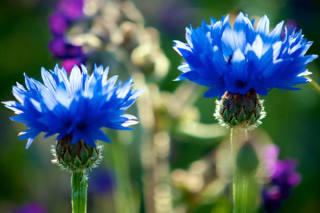
Greetings, caretaker. I am a cornflower, a being of sun and field, now thriving under your guardianship indoors. To help me flourish and produce my vibrant, fringed blooms, understanding my hydration needs is essential. From my roots to my petals, here is my detailed watering schedule, spoken from my perspective.
My roots are my anchor and my mouth. They do not seek a constant state of dampness; in fact, they require cycles of moisture and air. When you water me thoroughly, my roots drink deeply and the surrounding soil holds oxygen. If I am left sitting in water, the soil becomes saturated, pushing out this vital air. My roots, deprived of oxygen, will begin to suffocate and rot—a condition you know as "root rot." This is a silent, underground killer. Therefore, the golden rule is not to water me on a rigid calendar schedule, but based on the actual condition of my soil. I prefer a cycle of a deep, thorough drink followed by a period where the top layer of my soil can dry out.
I cannot speak, but I give you clear signals. The most reliable method to understand my needs is the "finger test." Please insert your index finger about one to two inches deep into the soil near my base. If the soil at that depth feels completely dry to the touch, I am ready for water. If you feel any coolness or moisture, please wait. Another method is to lift my container. After you water me, feel its weight. When the soil is dry, the pot will feel significantly lighter. Learning this weight difference is a quick and effective way to check on me. Do not rely on the surface appearance alone, as it can be deceptive and dry out long before the root zone does.
When my soil is dry, I need a proper, deep watering. A mere splash on the surface will only wet the top roots and encourage them to grow upwards, making me unstable. Instead, water me slowly and evenly at the base, avoiding my leaves and flowers, as wet foliage can invite fungal diseases. Continue pouring until you see water escaping freely from the drainage holes at the bottom of my pot. This ensures that the entire root ball has been saturated. It is absolutely critical that my container has these drainage holes. After watering, let my pot drain completely in the sink or on a saucer, and never allow me to sit in a saucer full of standing water for more than a few minutes.
My thirst changes with the seasons, mirroring the natural world outside. During the spring and summer, I am in my active growth phase, stretching towards the light and working hard to produce my blooms. With more sunlight and warmer temperatures, I will use water more quickly. You may need to check my soil every 3-5 days. In the autumn and winter, the light is weaker and my growth slows dramatically. I enter a period of rest. During this time, my water consumption decreases significantly. The soil will take much longer to dry out, so you might only need to water me every 10-14 days, or even less. Overwatering is the greatest danger to me during this dormant period.
Beyond the seasons, other elements in your home influence how quickly I dry out. If I am placed in a spot with very bright, direct light, I will need water more often than if I am in a location with indirect light. Higher temperatures and good air circulation will also increase evaporation from the soil and transpiration from my leaves. Conversely, a cool, humid, or still room will slow the drying process. The size and material of my pot matter, too. Terracotta pots are porous and allow water to evaporate through their walls, drying the soil faster than a plastic or glazed ceramic pot of the same size.