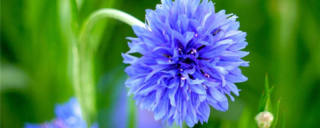
From our perspective as cornflower plants (Centaurea cyanus), light is not merely a condition for growth; it is our primary source of sustenance. We convert light energy into chemical energy through the process of photosynthesis. When photons from sunlight strike our leaves, they excite chlorophyll molecules, initiating a complex reaction that converts carbon dioxide and water into glucose—the sugar that fuels our every function. Without adequate light intensity and duration, this process becomes inefficient. We would be forced to redirect energy from vibrant blooming and sturdy stem development to a desperate search for light, resulting in a condition you call "etiolation," where we become leggy, weak, and pale.
While we are often associated with sunny meadows, our preference as potted houseplants is for bright but indirect light. A south-facing window where the sun's rays are filtered through a sheer curtain provides an ideal environment. The intense, direct sunlight of a summer afternoon, especially through a pane of glass, can be overwhelming. It can scorch our delicate leaves, causing them to develop brown, crispy patches and leading to excessive water loss through transpiration. Conversely, a deep, dark corner is equally unsuitable. We would struggle to photosynthesize effectively, leading to sparse foliage, a complete lack of flowering, and overall decline. An east-facing window, which offers several hours of gentle morning sun, is also an excellent location for us.
The length of time we are exposed to light is as critical as the intensity. To thrive and, most importantly, to initiate and sustain our flowering cycle, we require long days. We are photoperiodic plants, meaning our blooming is triggered by the duration of daylight. We need a minimum of 6 to 8 hours of bright, indirect light daily. When we receive this consistent daily ration of light, our internal biological clocks signal that conditions are favorable for reproduction, prompting us to produce our characteristic blue, pink, white, or purple blossoms. Shorter day lengths, common in winter, signal a time for rest and reduced growth.
As potted specimens, we have a limited ability to move towards the light. Therefore, an often-overlooked aspect of our care is ensuring uniform light distribution. If our pot remains stationary, the side facing the light source will grow more vigorously, while the shaded side will become underdeveloped. This can lead to a lopsided, unbalanced appearance. To promote symmetrical growth, we greatly benefit from you rotating our container a quarter turn every week. This simple action ensures that all sides of our foliage receive equal illumination, encouraging us to grow straight and full rather than leaning awkwardly toward the window.
We communicate our comfort level with the light conditions through our foliage. It is important for you to learn to read these signs. If we are receiving too much direct light, our leaves will tell you. They may fade in color, turning from a healthy grey-green to a yellowish hue, or they may develop the aforementioned brown, scorched tips and edges. If we are not receiving enough light, our growth will be stunted, and our stems will become abnormally elongated and thin as we stretch towards any available light source. The internodes—the spaces between leaves on the stem—will become noticeably longer. Our leaves will be smaller and fewer in number, and the most telling sign: we will simply refuse to flower.