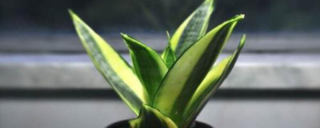
Here is a detailed explanation of the snake plant's (Sansevieria trifasciata) relationship with direct sunlight, from the plant's perspective.
To understand our tolerance for sunlight, one must first consider our origins. We hail from the arid, rocky regions of West Africa. In this environment, we are adapted to thrive under the dappled shade of larger shrubs and trees, as well as in bright, open areas where sunlight is intense but not always constant. Our physiology is a masterclass in water conservation. We possess thick, succulent leaves that store significant amounts of water to survive prolonged periods of drought. Furthermore, our leaves are covered with a thick cuticle – a waxy layer that reduces water loss through transpiration. These adaptations are crucial for surviving in bright, warm environments but are primarily defenses against dehydration, not necessarily against the sun's photons themselves.
While we are resilient, prolonged exposure to the intense, direct sunlight found in a south- or west-facing window, especially during the peak hours of summer, can be detrimental. The primary issue is photodamage. The excessive light energy overwhelms our photosynthetic systems, leading to a breakdown of chlorophyll, the pigment that gives us our green color and is essential for capturing light energy. This manifests physically as scorched or bleached patches on the leaves, which turn pale yellow, brown, or white. These areas are effectively dead and cannot recover. Additionally, such intense light significantly raises the leaf temperature, accelerating water loss. While our leaves are designed to hold water, extreme and rapid dehydration can cause the leaves to become wrinkled, thin, and eventually desiccated.
A sudden change in our light environment is particularly dangerous. If we have been growing in a low-light corner and are abruptly moved to a spot with hours of hot, direct sun, we will almost certainly suffer. Our metabolic systems are not prepared to handle the sudden influx of energy, and we have not had time to upregulate our protective biochemical pathways. This shock can cause severe scorching in a very short period. Any change in light conditions should be introduced gradually over several weeks to allow us to acclimate.
We truly flourish in bright, indirect light. This means a spot where we receive plenty of ambient light, such as near an east-facing window where we get the gentle morning sun, or a few feet back from a south-facing window where the harsh rays are diffused. In these conditions, our photosynthetic engines can run at peak efficiency without the risk of damage. This often results in stronger, faster growth, more pronounced leaf coloration, and even the chance to bloom, sending up a stalk of delicate, fragrant flowers. We can also tolerate lower light levels, but our growth will slow considerably.
It is important to read our signals. As described, signs of excessive direct sunlight include bleached or scorched leaves, brown crispy tips, and leaves that feel unusually warm to the touch. Conversely, if our light is too low, you will notice etiolation: our new growth will become abnormally elongated, thin, and weak as we stretch desperately towards a light source. The rich, variegated patterns on our leaves may also fade to a solid, dull green as we produce more chlorophyll to capture the limited available light.