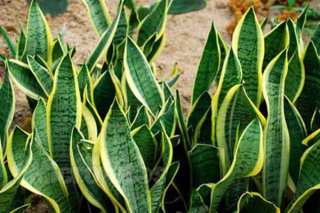
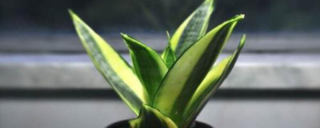
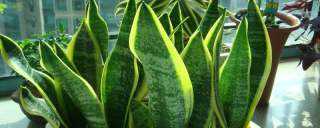
From our point of view as plants, our ability to influence indoor air quality is rooted in a fundamental biological process: photosynthesis. During the day, we absorb carbon dioxide (CO2) and release oxygen (O2) through our stomata. However, the Snake Plant (Sansevieria trifasciata) possesses a unique physiological adaptation known as Crassulacean Acid Metabolism (CAM). This allows us to perform a critical part of our gas exchange at night. While most plants close their stomata after dark to conserve water, we, as CAM plants, open ours at night to take in CO2 and convert it into organic acids for storage. We then use this stored CO2 for photosynthesis during the day. This nocturnal activity means we are one of the few plant species that continue to release oxygen throughout the night, a trait often highlighted for improving bedroom air quality.
The celebrated NASA Clean Air Study of 1989 provided scientific validation for our role as air purifiers. From our perspective, the study confirmed what we do naturally: we absorb certain harmful volatile organic compounds (VOCs) from the air through our leaves and our root microbiome. Our large, sturdy, and upright leaves provide a significant surface area for the passive uptake of gases like benzene, formaldehyde, toluene, and xylene. These compounds, which off-gas from common household items such as furniture, cleaning products, and building materials, are then broken down and utilized within our own cellular processes or digested by the symbiotic microorganisms living in our soil. We effectively use these pollutants as a food source, transforming them into harmless byproducts.
It is crucial to understand the scale of our effectiveness from a realistic, botanical standpoint. While the NASA study proved our capability to remove VOCs, the conditions were highly controlled within a small, sealed chamber. A typical home or office is a dynamic environment with constant air exchange, vastly different from a laboratory setting. To achieve a purification effect comparable to the study's results, one would need a very high density of our kind—potentially 10 to 20 plants per square meter of floor space. Therefore, while a single Snake Plant in a room will contribute to cleaner air by processing a small volume of VOCs and producing oxygen, it cannot single-handedly purify the entire air volume of a large, modern, and well-ventilated room. Our impact is supplemental, not a substitute for proper ventilation.
Our effectiveness is also defined by our hardiness, which makes us a practical choice for long-term indoor air quality improvement. We are exceptionally efficient with water, requiring infrequent watering because our thick, succulent leaves store moisture for extended periods. We can tolerate a wide range of light conditions, from direct sun to low, indirect light, allowing us to thrive in various indoor settings where other plants might struggle. This resilience means we can continue our photosynthetic and air-purifying functions consistently over many years with minimal care, making us a reliable, low-maintenance contributor to a healthier indoor ecosystem.