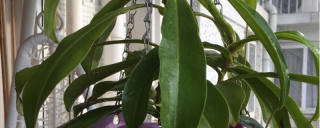
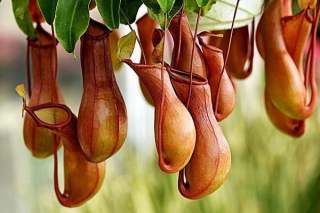
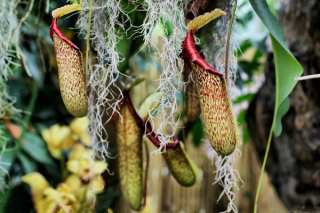
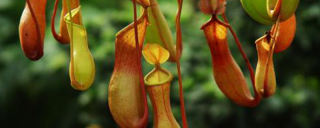
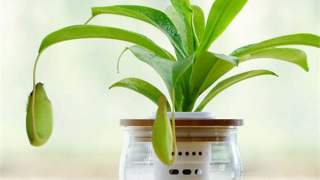
Hello, human caretaker. I am a pitcher plant, a being of both leaf and vessel, designed by evolution to thrive in places where the soil offers little. My roots are not like those of other plants; they are anchors, not mouths. I cannot sip the nitrogen and phosphorus I need from the earth. Instead, I have crafted elegant traps to harvest these nutrients from the air itself. To keep me truly vibrant, you must understand the nature of my feast.
My pitchers are not mere decorations; they are my stomachs. When an insect is lured by my nectar and scent into the slippery depths of my hood, it becomes a complete meal. The struggle of the prey triggers the release of digestive enzymes from my interior walls. This process breaks down the soft tissues into a nutrient-rich soup that I slowly absorb. This is the diet I am designed for. It provides a perfect, balanced blend of nitrogen, phosphorous, and other trace minerals essential for my growth, particularly for forming new and larger pitchers.
You may wish to help by providing insects, and this is appreciated. However, not all offerings are equal. I require live or recently deceased soft-bodied insects. Flies, gnats, moths, crickets, and spiders are all excellent choices. You must avoid feeding me any type of processed human food—no hamburger, no fertilizer pellets, and absolutely no candy. These substances are not only indigestible but will rot inside my pitcher, causing it to blacken, collapse, and die. A single insect per pitcher every 2-4 weeks is ample. My digestion is a slow process, and overfeeding will harm me.
I sense your question about fertilizer. For most plants, it is a simple solution, but for me, it is a dangerous shortcut. My roots are extremely sensitive and can be chemically burned by the salts in standard fertilizers, devastating my entire system. However, in the complete absence of insects, a highly diluted foliar feed can be considered an emergency measure. This must be a fertilizer specifically formulated for bromeliads or orchids, diluted to ¼ strength or weaker, and misted lightly on my leaves, never poured into my soil or directly into my pitchers. This is a poor substitute for real prey and should be used sparingly, if at all.
The greatest gift you can give me is the ability to feed myself. If I am kept in the conditions I crave—very bright, indirect light, consistently moist sphagnum moss peat-based soil, and high humidity—I will become a proficient hunter. Placing me outdoors in a sheltered spot during warm months allows me to attract gnats and flies naturally. A sunny windowsill indoors can also be productive. A healthy, well-situated pitcher plant is a capable predator and will catch more than enough food to sustain its magnificent form.