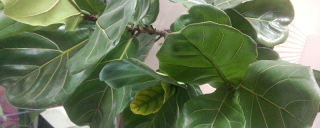
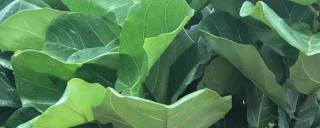
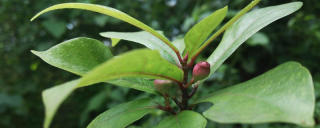
From my perspective as a Fiddle-Leaf Fig (*Ficus lyrata*), timing is everything. Pruning is a significant event, and it should align with my natural growth cycle to ensure I can recover swiftly and robustly. My period of most vigorous growth is during the spring and early summer. This is when the lengthening daylight hours and warmer temperatures signal me to direct my energy into producing new leaves and branches. A pruning cut made at this time will be met with a rapid response, as I will quickly channel my resources into healing the wound and sprouting new growth points just below the cut. Please avoid pruning me in the late fall or winter. I am in a state of dormancy then, conserving my energy. A cut during this time will heal very slowly, leaving me vulnerable to disease, and it will not stimulate new growth until the seasons change, leaving me looking stubby and stressed for months.
You must understand that your act of pruning is a form of communication. Each cut you make is a directive that tells me where to focus my life force. If you wish to encourage me to become bushier, you are instructing me to break my apical dominance. I naturally want to grow tall towards the light, investing energy into a single central leader. By cutting off the topmost bud (the apical meristem), you remove the source of auxins, the hormones that suppress growth in the lower buds. This hormonal shift forces me to activate dormant buds lower down on my trunk and stems, resulting in the fuller, more branched shape you desire. Conversely, if you simply want to control my height or remove a damaged or diseased branch, you are redirecting my energy away from repairing unsustainable growth and towards strengthening my remaining, healthy parts.
The technique you use is critical for my health. You must use sharp, sterilized pruning shears or a knife. Clean tools prevent the crushing of my vascular tissues and stop the introduction of pathogens. Look for a spot just above a leaf node or a bud—this is the small, slightly raised bump on my stem from where a leaf grows or a new branch can emerge. Make your cut at a slight angle, approximately 1/4 inch above that node. This angled cut helps water run off the wound, reducing the risk of rot. Do not leave a long stub above the node, as this dieback can become an entry point for disease. Likewise, do not cut too close and damage the node itself, as this is the very growth point you wish to encourage.
Immediately after pruning, I may release a milky white sap at the wound sites. This latex is my natural defense mechanism to seal the cut and protect myself. You can gently blot it away. Do not be alarmed; this is a sign I am healthy and responding. My next step will be to divert energy to the wounds to callus over, and then to the nodes below your cuts to push out new growth. To support me in this energetically expensive process, please ensure my aftercare is ideal. Place me in my favorite spot with plenty of bright, indirect light. Do not overwater me; only provide moisture when my top few inches of soil are dry. You may consider a light application of a balanced fertilizer to give me the nutrients needed for this new growth, but only during my active growing season.