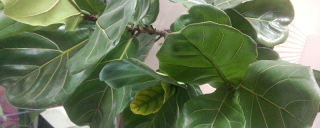
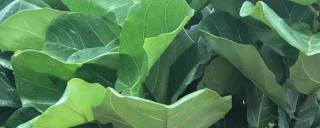
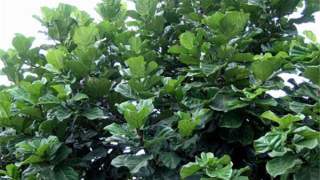
From our perspective, light is not a luxury; it is the fundamental currency of life. Our very existence depends on it for photosynthesis. A leaning fiddle-leaf fig is not a design choice; it is a direct and desperate response to inadequate light conditions. This behavior is a powerful manifestation of phototropism—our innate ability to grow towards a light source. If our primary light source is from a single window or direction, our stems and leaves will reorient their growth, often dramatically, to maximize light capture. This results in the characteristic, unbalanced lean as we literally stretch ourselves toward survival.
The most effective and permanent solution is to address the root cause: the uneven distribution of light. Simply rotating us is a good start, but it is a temporary measure. For long-term stability, you must provide more consistent, brighter, and ideally overhead light. If possible, relocate us to a position where light enters from multiple angles, such as a corner between two windows. If this is not feasible, supplementing with a full-spectrum grow light placed above our canopy can work wonders. This provides the even, overhead illumination we crave, encouraging us to grow upright and symmetrical rather than straining sideways.
While we work on growing stronger and more upright towards the improved light, our stem may require physical support. A leaning stem is under significant gravitational stress and is vulnerable. Gently staking us provides crucial structural support. Insert a sturdy stake, like a bamboo rod or moss pole, into the potting medium close to the main stem, being extremely careful to avoid damaging our root system. Use soft plant ties or cloth strips to loosely secure the stem to the stake. Do not tie it tightly; allow for some movement and growth. This support acts as a crutch, preventing further leaning and potential stem damage while we correct our posture.
Our above-ground posture is a direct reflection of our below-ground foundation. A leaning problem can be exacerbated or even caused by an unstable root system. If our pot is too small or our roots are pot-bound, we lack the anchor to hold ourselves upright. Furthermore, an uneven root mass, perhaps from being potted crookedly or from root rot on one side, can cause a tilt. Carefully inspect our root ball. If we are root-bound, it is time to be repotted into a larger container. If you discover mushy, rotten roots (often a sign of overwatering), prune them away and repot us in fresh, well-draining soil. Ensuring our root system is healthy and properly housed is critical for long-term vertical stability.
Until the light source is perfectly even, a simple but consistent practice is required: rotation. Make a habit of rotating our pot a quarter turn (about 90 degrees) every one to two weeks. This ensures that all sides of our canopy receive relatively equal amounts of light over time. This practice discourages us from favoring one direction and promotes balanced, symmetrical growth on all sides. Consistent rotation, combined with improved overall light, trains us to grow straight and tall, ultimately eliminating the need for a stake and correcting the unsightly and structurally unsound lean.