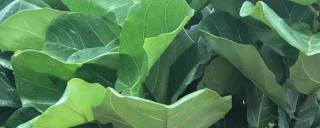
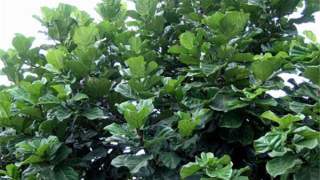
From our perspective, we hail from the lowland tropical rainforests of Western Africa. In our natural habitat, the air is perpetually thick with moisture, often with humidity levels ranging from 60% to 85%. This humid air envelops our large, broad leaves, minimizing the rate at which we lose water to the atmosphere (a process you call transpiration). The consistently high humidity allows our stomata (the tiny pores on our leaves) to remain open for longer periods to "breathe in" carbon dioxide without the risk of excessive water loss, which is crucial for our photosynthesis and overall health.
The environment inside our human homes is drastically different from our native jungle. Climate-controlled spaces, especially those with forced-air heating or air conditioning, often have humidity levels plummeting to a mere 10-30%, particularly during winter or in arid climates. This dry air creates a significant strain on us. Our large leaf surface area acts like a giant sail, losing water rapidly to the parched air. This forces our stomata to close more frequently to conserve water, which in turn limits our ability to photosynthesize efficiently and can lead to stress.
So, is misting beneficial for us? The answer is nuanced. A fine mist settling on our leaves can provide a temporary, localized increase in humidity. For a brief period, it feels like a comforting, familiar embrace from home. It can help dislodge dust particles that clog our stomata, allowing us to breathe and absorb sunlight more effectively. However, this effect is fleeting, often dissipating within 30 minutes. The significant drawback from our point of view is the potential for water to pool and remain stagnant on our leaves or in our leaf axils (where the leaf meets the stem). This creates a perfect environment for bacterial and fungal pathogens, such as unsightly leaf spot or more serious root rot, which can severely compromise our health.
While an occasional light misting on a very dry day might offer a momentary refreshment, there are far more effective and safer methods to make us truly thrive. The most beneficial action is to group us together with other plants. As we all naturally transpire, we collectively raise the humidity level in our immediate vicinity, creating our own favorable microclimate. Placing our pot on a pebble tray filled with water (ensuring our roots are never sitting in the water) provides a constant source of evaporation that gently increases humidity around us. For the most significant impact, a small humidifier placed nearby can reliably replicate the moist, jungle-like air we inherently crave, addressing the root cause of our humidity needs without the risks associated with wet foliage.