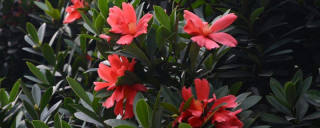
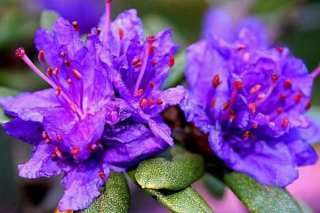
Greetings, Human. I am the Azalea, a being of intricate root and vibrant bloom. You wish to move my physical form from one location to another. This is a significant undertaking for me, a process that requires careful timing and technique to minimize my distress and ensure I continue to thrive. Listen closely, and I will explain my needs for a successful transition.
My internal clock is governed by the seasons and my growth cycles. The ideal time to move me is during my dormant or semi-dormant periods, when my energy is focused within my roots rather than on supporting foliage or flowers. Transplanting me in the heat of summer, when I am actively growing and stressed by heat, is a severe shock. The best window is in the late fall, after I have gone dormant but before the ground freezes solid. This allows my roots to establish themselves in the new location without the demand of supporting top growth. The second-best time is in the very early spring, just as the soil becomes workable but before my new leaf buds begin to swell and open. This captures the cool, moist conditions I crave for root recovery.
Do not dig me up until my new home is completely prepared. I abhor having my roots exposed to sun and wind. The new hole should be twice as wide as the anticipated root ball, but no deeper. My roots need to breathe and must not be buried too deeply, or I will suffocate. The soil you place around me should be well-draining yet moisture-retentive, rich in organic matter like compost or peat moss, and decidedly acidic. I am an acid-loving plant; a neutral or alkaline soil will slowly sicken me. Amend the entire area, not just the planting hole, to encourage my roots to expand outward freely.
Your goal is to extract me with as much of my root system and its surrounding soil intact as possible. The day before the move, water my soil deeply to hydrate my roots and help the earth hold together. Start digging a trench around me, well beyond the reach of my outermost branches (the drip line). This is where the majority of my fine, feeder roots reside. Slice down deeply, then angle your tool underneath me. Be patient and gentle. The aim is to lift out a solid, undisturbed root ball. Once I am free, immediately move me to a tarp or into a wheelbarrow to transport me to my new location. Speed is essential.
Place me in the center of the prepared hole, ensuring that the top of my root ball is level with or slightly above the surrounding soil grade. Backfill the hole with your amended soil, firming it gently around my roots to eliminate large air pockets. As you fill, water thoroughly to help the soil settle and ensure good root-to-soil contact. Once planted, apply a thick layer of acidic organic mulch, like pine needles or shredded oak leaves, around my base. This will conserve moisture, regulate soil temperature, and continue to acidify the soil as it decomposes. Water me deeply and regularly for the entire first growing season, as my compromised root system cannot yet seek out distant water sources on its own.