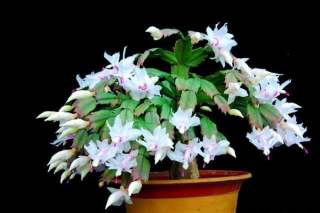
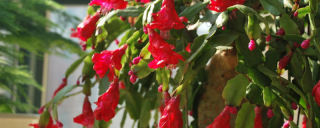
The practice of using ice cubes to water Christmas cacti (Schlumbergera bridgesii) has gained popularity as a method to provide slow, controlled hydration and prevent overwatering. However, from a plant physiology and health perspective, this method is fundamentally at odds with the natural needs of this tropical epiphyte. Here is a detailed analysis from the plant's point of view.
As a plant native to the humid, shaded canopies of the coastal mountains of Brazil, the Christmas cactus is adapted to consistently mild temperatures. Its root system, like that of most tropical plants, is highly sensitive to cold. When ice cubes are placed directly on the potting mix and against the plant's base, the roots are subjected to a rapid and significant temperature drop. This thermal shock can cause immediate damage to the delicate root cells, impairing their function. Even if the damage is not instantly fatal, it weakens the root system, making it more susceptible to pathogens and reducing its efficiency in absorbing water and nutrients. A compromised root system cannot adequately support the plant's foliage and flower production.
The goal of watering is to evenly moisten the entire root ball. The ice cube method fails to achieve this. As the ice melts slowly, the water tends to concentrate in one localized area directly beneath the cube, leaving the rest of the potting mix dry. This creates an uneven moisture profile where some roots may be in a waterlogged state while others are in drought conditions. Furthermore, the small volume of water from one or two ice cubes is often insufficient to thoroughly saturate the soil, especially in a pot of any meaningful size. The roots on the periphery of the pot may never receive any moisture, causing them to desiccate and die back. A healthy root system requires consistent and uniform moisture to thrive.
The primary argument for the ice cube method is that it prevents overwatering by providing a measured amount of water. While overwatering is indeed a major threat to Christmas cacti, it is caused by a high frequency of watering, not necessarily the volume of water given at one time. The correct watering technique for this plant is the "soak and dry" method: thoroughly drenching the soil until water flows from the drainage holes, and then allowing the top third of the potting mix to dry out completely before watering again. This approach ensures the entire root system is hydrated and promotes the necessary cycle of wet and dry that encourages strong root growth. The ice cube method provides a superficial solution that risks underwatering and uneven hydration.
Persistently using ice cubes will lead to chronic stress for the Christmas cactus. The combination of cold stress and an under-hydrated, uneven root system will manifest in the plant's overall health. Above the soil, you may observe symptoms such as stunted growth, leaf segments (cladodes) that appear shriveled, reddened, or limp, and a significant reduction in flowering. A stressed plant is also far more vulnerable to infestations from pests like spider mites and fungal infections. The energy the plant should be using for growth and blooming is instead diverted to constant root repair and survival, ultimately shortening the plant's lifespan and diminishing its ornamental value.