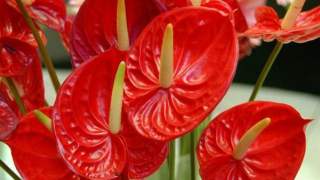
Hello, dedicated caretaker. I am your Anthurium, a vibrant soul from the tropical rainforests. When I stop producing my beautiful, heart-shaped "flowers" (which are actually modified leaves called spathes), it's not a sign of ingratitude. It's my way of communicating that a fundamental need is not being met. To understand how to encourage me to re-bloom, you must see the world from my perspective. Here is what I require to feel secure and prosperous enough to gift you with blossoms year after year.
In my ancestral home, I live under the canopy of giant trees. The light that reaches me is bright but filtered, never direct. When you place me in a spot with harsh, direct sunlight, my leaves scorch, turning yellow or brown. This is a trauma response; I am literally burning. Conversely, a dark corner tells my internal clock that it is time to conserve energy, not expend it on flowering. To trigger my blooming cycle, I need abundant, indirect light. An east-facing window is ideal, or a few feet back from a south or west window with a sheer curtain. This quality of light mimics my natural habitat and signals to my core that conditions are stable and energy-rich enough for reproduction.
My roots are thick and fleshy (they are aerial roots, similar to orchids), and they despise sitting in waterlogged soil. Soggy conditions suffocate me, leading to root rot, a silent killer that prevents me from absorbing nutrients and, consequently, from blooming. On the other hand, if you let me become bone dry, I go into survival mode. Flowering is a luxury my system cannot afford when I'm dehydrated. The goal is consistently moist, but not wet, soil. Water me thoroughly when the top inch or two of the potting mix feels dry to the touch. Ensure any excess water can drain freely from the pot. This balance makes me feel secure and well-hydrated, creating the foundation for health and bloom production.
Blooming is an energetically expensive process for me. It requires significant resources. If I am living in a pot with a limited amount of soil, I will quickly deplete the available nutrients. Without replenishment, I simply lack the strength to produce flowers. However, I am sensitive to strong fertilizers, especially those high in salts, which can burn my roots. To support my blooming, I thrive on a gentle, balanced fertilizer. A diluted, water-soluble fertilizer with a higher phosphorus content (the middle number on the fertilizer package, like a 15-30-15 ratio) applied every 6-8 weeks during my active growing season (spring and summer) provides the precise boost I need. In the fall and winter, I am resting, so please withhold fertilizer.
I am a tropical plant, and I remember the warm, moist air of the jungle. Sudden drafts from doors or air conditioners, or dry air from heating vents, cause me stress. When I am stressed, my priority is survival, not celebration. I flourish in temperatures between 65°F and 80°F (18°C - 27°C) and appreciate humidity levels above 50%. You can increase humidity by placing my pot on a tray filled with pebbles and water (ensuring the pot is not sitting in the water) or by grouping me with other plants. This humid microclimate makes my leaves lush and encourages the spathe and spadix (the true flowers) to emerge and last longer.
Contrary to what you might think, I do not always need a bigger pot. In fact, I tend to bloom more reliably when I am slightly pot-bound. This is because when my roots feel a little confined, it triggers a natural response to focus energy on reproduction (flowering) rather than just root and leaf expansion. Only consider repotting me every 2-3 years, or when you see roots circling the top of the soil or growing out of the drainage holes. When you do repot, only move me to a pot that is one size larger and use a coarse, well-draining potting mix, perhaps one formulated for orchids or African violets.