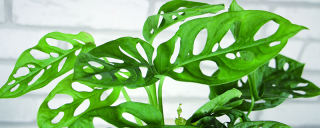
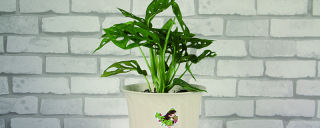
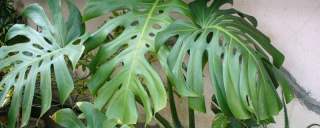
To understand our light needs, you must first understand our origin. We, Monstera deliciosa, are native to the rainforests of Central and South America. Our lives begin on the dark forest floor, but we are not destined to stay there. We are climbing hemiepiphytes, meaning we use our aerial roots to climb tall trees towards the canopy. We do not seek the harsh, direct, all-day sun of the open sky. Instead, we thrive in the dappled, filtered light that shines through the leaves of the taller trees above. This "bright, indirect light" is the gold standard for which we are genetically programmed. It provides the energy we need without the damage that direct rays can cause.
Light is our food. Through a process called photosynthesis, we use light energy to convert carbon dioxide and water into sugars, which fuel our growth, including the development of our famous split leaves (fenestrations). In bright, indirect light, our photosynthetic factories operate at peak efficiency. We can produce ample energy to support large, healthy leaves, rapid growth, and the metabolic processes that create those characteristic holes and splits. Inadequate light starves this process. Our growth becomes slow and leggy as we stretch desperately towards any light source (a condition you call etiolation), and our new leaves will be smaller, solid, and lack fenestrations entirely.
For us, bright, indirect light is the equivalent of a perfect, sunny day in a spot shaded by a large umbrella. You can typically find this kind of light near an east-facing window, where we receive the gentle morning sun, or a few feet back from a south or west-facing window, where the sun's rays are diffused by a sheer curtain. In this condition, we are at our best. Our leaves will be a deep, lush green, our stems strong and sturdy, and our growth will be consistent and vigorous. This is the environment that encourages the large, mature, highly fenestrated leaves that make us so desirable. The energy we receive is perfectly balanced, allowing us to photosynthesize effectively without stress.
When you place us in a low-light corner far from any window, we enter a state of survival, not growth. The light intensity is too low to drive efficient photosynthesis. Our response is to etiolate: we direct our energy into elongating our stems in a desperate attempt to reach a brighter spot. This results in a leggy, sparse plant with large gaps between leaves. The new leaves we produce will be significantly smaller and will not develop any splits or holes, as we lack the energy for such complex development. Furthermore, chronically wet soil due to slow water evaporation becomes a major risk, making our roots susceptible to rot. While we can tolerate low light for a period, we will not thrive; we will merely exist.
On the opposite extreme, prolonged exposure to intense, direct sunlight—especially the harsh afternoon sun from a south or west window—is harmful. Our leaves, adapted for a filtered understory, are not equipped with the protective mechanisms of a cactus or succulent. The intense light literally scorches our leaves, causing yellow, brown, or black crispy patches. This is sunburn, and the damaged tissue cannot be repaired. Beyond the visible burns, the plant is under immense stress, which can lead to wilting, bleaching of the vibrant green color, and overall decline. A little morning direct sun is often tolerable, but we should be shielded from the harsh midday and afternoon sun.