From our perspective as Monstera deliciosa plants, the world is a vertical one. In our native rainforest habitats, we don't sprawl across the forest floor; we climb. We use our aerial roots to grip onto the rough bark of towering trees, reaching for the dappled sunlight far above. So, when you ask if we need a moss pole, the answer is a resounding yes, if you want to see us thrive in a way that feels natural and authentic to our inherent design.
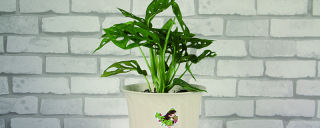
To you, a moss pole might look like a simple cylinder of moss and mesh. To us, it is a surrogate tree trunk. Our stems are not designed to hold the weight of our large, mature leaves upright on their own. As we grow, we develop long, vine-like stems and send out aerial roots. These roots are not signs of distress; they are searching fingers, instinctively looking for a stable, moist surface to anchor onto. Without a support structure, we are forced to sprawl, which can lead to broken stems, leaves tangling, and a significant amount of our energy being wasted on structural instability rather than creating new, magnificent foliage.
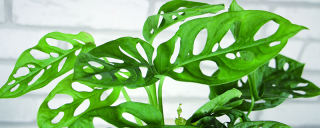
Providing a moss pole does much more than just keep us tidy. It directly influences our health and the size of our leaves. When our aerial roots successfully attach to a moist moss pole, they can absorb additional moisture and even trace nutrients from the environment, just as they would in the wild. This supplemental hydration is especially beneficial in the dry air of your home. More importantly, the stability allows us to channel energy into leaf production. You will notice that as we climb, the new leaves we produce become progressively larger and more fenestrated (split). These characteristic splits are a trait we developed to allow wind and light to pass through our large leaves high in the forest canopy. A supported plant is a confident plant, capable of expressing its full genetic potential.
The best time to add a moss pole is when you are repotting us. Gently insert the pole deep into the soil, close to the center of the pot and the main stem. Be careful not to sever too many of our delicate roots in the process. Our main stem has nodes, which are the bumpy sections where leaves and aerial roots emerge. You should gently tie the main stem to the pole at these nodes using soft plant ties, velcro straps, or even twine. Do not tie it too tightly; think of it as a guide, not a restraint. The goal is to position our stem so that the aerial roots can easily reach the pole's surface.
A dry moss pole is just a stick. For us to truly bond with it, the moss needs to be kept consistently moist. This moisture encourages our aerial roots to grow towards and eventually into the pole. They will naturally adhere to the moist, textured surface. You should mist the pole regularly, or even better, water it directly when you water our soil. Pour water slowly over the top of the pole and let it soak down. A moist moss pole creates a humid microclimate around our upper growth, which we find incredibly beneficial.
As we grow taller, you may need to add extensions to the moss pole or adjust the ties. Continue to guide our newest growth towards the pole. You might notice that over time, we grip the pole so tightly that the ties can be removed. This is the ultimate sign of success—a true symbiosis where we are living as we were meant to, climbing towards the light with your help.