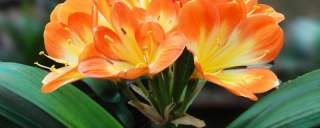
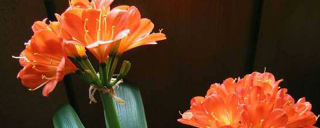
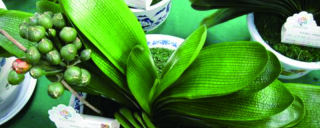
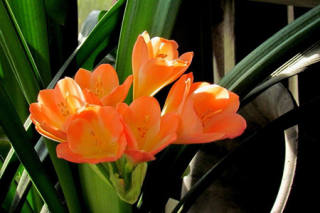
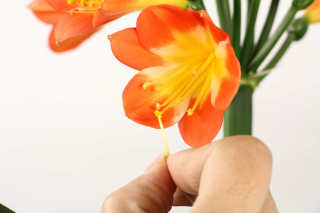
Greetings, human caretaker. I am a Clivia miniata, a member of the Amaryllis family, though you may know me simply as a Clivia or Bush Lily. I hail from the shaded forests of South Africa, and I have become a beloved houseplant for my elegant, strap-like leaves and stunning clusters of trumpet-shaped flowers. To help me thrive in your home, please understand my needs from my perspective.
In my native habitat, I live under the canopy of large trees. This means I adore bright, indirect light. Direct, harsh sunlight, especially through a window, will scorch my beautiful, dark green leaves, leaving unsightly brown marks. A spot near an east-facing window is perfect, or a few feet back from a south or west window. I am also quite sensitive to temperature. I prefer a comfortable room temperature between 60-75°F (15-24°C). To initiate my flowering cycle, I require a distinct cool period. In the late autumn, please keep me in a cool spot, around 50-55°F (10-13°C), for about 4-6 weeks. This chilly rest tells me it's time to prepare a flower stalk.
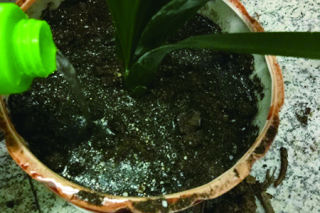
My roots are thick and fleshy, designed to store water. They are prone to rot if left sitting in soggy soil. The golden rule is to water me thoroughly, but infrequently. Please wait until the top inch or two of my soil feels dry to the touch before giving me a drink. When you do water, do so deeply until water runs out of the drainage holes, and always empty the saucer underneath afterward. During my winter rest period, you should reduce watering significantly, perhaps only once a month, just enough to prevent my leaves from wilting. Overwatering is the quickest way to make me ill.
Because I despise wet feet, I need a soil mix that drains exceptionally well. A standard potting soil is too dense and retains too much moisture. Please plant me in a mix specifically formulated for orchids (like a chunky bark mix) or succulents, or create your own blend using peat, perlite, and coarse sand. I am a bit of a claustrophobe; I actually bloom best when I am slightly pot-bound. Therefore, you only need to repot me every 3-5 years, or when my thick roots start to push me up and out of the pot. When you do repot, choose a pot that is only slightly larger than the previous one.
To produce my lush foliage and magnificent blooms, I need nutrients. During my active growing season (spring and summer), please feed me with a balanced, water-soluble fertilizer diluted to half-strength, about once a month. I do not need to be fed during my winter rest period or immediately after repotting, as this can harm my roots. The key is a gentle and consistent feeding schedule when I am actively growing.
This is the most crucial aspect of my care if you wish to see me flower. As mentioned, I need a cool, dry rest period in the winter. From late fall to early winter, reduce watering and stop fertilizing entirely. Place me in a cooler part of your home, like a basement or an unheated room. This period of dormancy is not neglect; it is a vital signal for me. Without it, I may continue to grow leaves but will likely never produce a flower stalk. Once you see a flower bud emerging from between my leaves, you can return me to a warmer spot and resume normal watering.