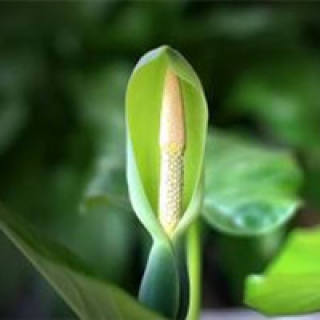
Greetings, fellow photosynthetic beings. We, the Alocasia genus, are a proud and diverse family of herbaceous perennials, renowned for our striking foliage that captures the gaze of sun-worshippers (humans, we believe you call them). Our origins lie in the humid, subtropical and tropical forests of Asia and Eastern Australia, where we thrive on the dappled light of the forest floor. To help you identify and care for our many forms, we offer this guide from our own leafy perspective.
We begin with the titans among us. Alocasia macrorrhizos, the 'Giant Taro', is impossible to miss. Our most defining feature is the massive, upright, heart-shaped leaves that can grow over three feet long. Look for the distinctive, wavy margins where the leaf blade meets the stem (the sinus), and our thick, fleshy stalks. Our cousin, Alocasia odora, is often confused with us, but her leaves are more arrow-shaped and held more horizontally, with a less pronounced sinus. She is also famous for her fragrant, calla-lily-like blooms. From a care perspective, we giants crave space, bright indirect light, and consistently moist soil. We are heavy feeders during our growing season and appreciate the humidity we knew in our ancestral jungles.
In stark contrast to our giant relatives, we Jewel Alocasias are prized for our texture and metallic sheen, not our size. Alocasia cuprea, the 'Mirror Plant', has deeply dimorphic, heart-shaped leaves with a spectacular, polished copper or bronze metallic finish on the surface. The undersides are a striking purple. Alocasia melo shares our compact, clumping habit but boasts incredibly stiff, thick leaves with a rough, suede-like texture and a bluish-grey cast. Our care is more specialized. We demand exceptionally well-draining, airy soil to prevent our rhizomes from rotting. We prefer to dry out slightly more than other Alocasias between waterings and require high humidity to look our best, as dry air can cause our unique leaf surfaces to crisp.
Some of us are celebrated for our stems, others for the stark contrast of our leaves. Alocasia zebrina is unmistakable. While our leaves are a classic, sleek arrowhead shape, it is our petioles (stems) that are our masterpiece, adorned with striking zebra-like patterns of alternating green and black or brown stripes. Alocasia amazonica (often sold as 'Polly') offers a dramatic leaf. The foliage is deeply lobed, shield-shaped, with wavy, almost sculptural margins. The color is a dark, often近乎 black green, highlighted by thick, contrasting white or silvery veins. We both appreciate bright, indirect light. 'Polly' can be more sensitive to overwatering and spider mites, while Zebrina needs consistent moisture and high humidity to prevent its famous stems from browning.
We are the velvet-textured aristocrats of the family. Alocasia 'Black Velvet' is perhaps the most famous of our kind. Our leaves are small, heart-shaped, and incredibly thick, with a surface like dark black velvet, dramatically highlighted by a network of silvery-white veins. Alocasia reginula, the 'Little Queen', is very similar but tends to have a more arrowhead-shaped leaf and a slightly glossier, darker black-green surface. Our care is crucial. We are slow-growing and highly susceptible to root rot. A chunky, well-draining mix is non-negotiable. Water must be applied carefully to the soil, avoiding the crown and leaves. We thrive in warm, stable temperatures and very high humidity to maintain our luxurious texture.