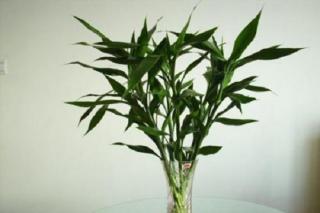
The most critical difference lies in their scientific classification. Real bamboo belongs to the true grass family, Poaceae, specifically the subfamily Bambusoideae. This group contains over 1,400 species across more than 100 genera, including giants like Phyllostachys edulis (Moso bamboo). Lucky Bamboo, on the other hand, is not a bamboo at all. Its botanical name is Dracaena sanderiana, and it is a member of the Asparagaceae family, closely related to other common houseplants like the Dragon Tree (Dracaena marginata). This means that despite the visual similarity in their stalked growth, they are botanically as distinct as grass is from a lily.
The growth patterns of these two plants are fundamentally different. Real bamboo is a monocotyledonous perennial plant known for its remarkable growth speed. It develops a complex underground stem system called a rhizome, from which vertical culms (the familiar bamboo "stalks") shoot up. These culms are hollow and segmented, with prominent nodes (rings) separating the internodes. The plant grows as a dense clump or can spread aggressively, depending on the rhizome type (clumping or running).
In contrast, Lucky Bamboo is a slow-growing, tropical shrub. Its stems are solid, not hollow. While they are often trained to have a segmented appearance similar to bamboo, this is usually achieved by removing leaves to expose the nodes on the solid stem. The plant does not produce rhizomes and will not spread or grow to the towering heights of real bamboo. Its growth is contained to a single, upright stalk or a cluster of stalks from a single base.
The leaves of these plants provide another clear point of distinction. Real bamboo leaves are typically narrow, lance-shaped, and grow in clusters from the nodes of the woody, mature culms. They are attached by a short leaf stalk (petiole). When a bamboo plant matures, it may produce a flowering event, which is often a unique and sometimes monocarpic (once-in-a-lifetime) occurrence, after which the plant may die.
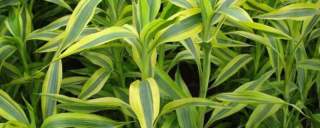
Lucky Bamboo has softer, fleshy leaves that are broader and more lanceolate, growing directly from the top or sides of the green, cane-like stems. The leaves are typically a lush green, but variegated cultivars with white or yellow stripes are common. As a Dracaena, it can produce flowers under ideal conditions—small, white or pinkish clusters—though it rarely blooms indoors. It does not exhibit the dramatic, synchronous flowering behavior of real bamboo.
Their environmental needs reflect their different origins. Real bamboo species are predominantly temperate or subtropical plants that require abundant sunlight, well-draining soil, and significant space to grow. Many are cold-hardy and can be planted outdoors where they form large groves. They are typically propagated by dividing the rhizome system.
Lucky Bamboo is native to the understory forests of Central Africa. It is a tender tropical plant that is almost exclusively grown as a houseplant. It is famously adaptable to low-light conditions and is most often cultivated hydroponically in containers of water and pebbles, although it can also be grown in soil. It is highly sensitive to chlorine and fluoride in tap water, which can cause leaf tip burn. It is propagated simply by taking stem cuttings, which root easily in water.