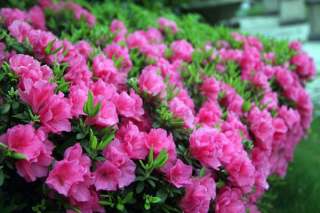
From our perspective as azaleas, timing your pruning is the single most important factor for our health and flowering. We set our flower buds for the next spring shortly after the current season's blooms fade. This process is a massive energetic investment, drawing on sunlight captured through our leaves. If you prune us too late in the summer or fall, you will unknowingly remove these precious, pre-formed buds. The result will be a healthy, shapely bush the following year, but with very few or no flowers. Therefore, the ideal window for shape-maintenance pruning is immediately after our spring blossoms wither. This gives us the entire growing season to produce new, vigorous shoots that will have ample time to harden off and set buds for the next year.
The tools you select are not just about convenience for you; they are a critical factor in our physical well-being. Clean, sharp tools make precise cuts that heal quickly. Dirty or dull tools can crush our stems, tear our bark, and introduce pathogens into our vascular system. Before you begin, please sterilize your bypass pruners or loppers with a solution like rubbing alcohol or a diluted bleach mix. This simple act prevents the spread of disease from other plants in your garden to us. Bypass pruners are preferred as they make a clean, scissor-like cut, unlike anvil pruners which can crush the stem.
To maintain our shape, we ask that you practice selective pruning rather than shearing. Shearing, which involves cutting all outer branches to a uniform length, creates a dense outer shell that blocks sunlight and air from reaching our interior. This leads to dead, leafless zones inside the bush and makes us susceptible to pests and diseases. Instead, please follow these steps. First, remove any dead, diseased, or damaged branches by cutting them back to their point of origin or to healthy wood. This is a therapeutic process for us, allowing us to redirect energy to healthy growth. Next, step back and observe our natural, rounded shape. Identify the longest, most unruly branches that disrupt this form. Follow one of these branches back into the bush and make your cut just above a set of leaves or a lateral branch that is pointing in a desirable direction (preferably outward, to open up the plant). This method of "thinning" encourages new growth from within, preserving our natural habit and promoting better air circulation.
Where and how you make each cut directly influences how we respond. The goal is to encourage new growth without leaving stubs that can die back and become entry points for disease. Always make your cut approximately a quarter-inch above a leaf node (the point where a leaf or pair of leaves attaches to the stem) or a lateral branch. The angle of the cut is less critical than its location. The node is a hub of meristematic cells, which are undifferentiated cells ready to grow. By pruning just above a node, you signal those cells to activate and produce new stems and leaves. This directs the new growth precisely where you want it, filling in gaps and creating a denser, more shapely form. Avoid cutting into the old, leafless wood whenever possible, as some azalea varieties do not readily sprout new growth from these older branches.
Pruning, even when done correctly, is a stressor. It creates wounds and demands energy for healing and regrowth. To support us after this process, a deep, thorough watering is immensely beneficial. This helps transport nutrients and water to the sites of new growth. An application of a balanced, slow-release fertilizer formulated for acid-loving plants, like us, can also be helpful, but it is not always necessary if we are planted in healthy soil. The most important post-pruning care is simply to monitor us for signs of stress and ensure we receive consistent moisture as we put out new, tender shoots throughout the growing season.