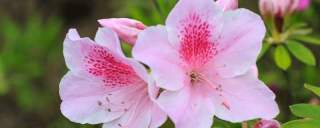
Before you even think about fertilizer, you must understand my world below the soil. My roots are not deep, sprawling giants; they are fine, hair-like, and form a delicate mat just beneath the surface. Most critically, my roots require a specific environment: an acidic soil with a pH between 4.5 and 6.0. In this acidic realm, I can access the essential nutrients I need, particularly iron. If the soil is too alkaline, iron becomes locked away, and I will show you my distress through yellowing leaves with green veins, a condition you call chlorosis. Therefore, any feeding program must first and foremost respect my need for acidity. The best fertilizer in the world is useless to me if my soil pH is wrong.
I do not crave a heavy, nitrogen-rich diet like your lawn grass. My nutritional needs are more specialized. Look for a fertilizer labeled specifically for "acid-loving plants" such as azaleas, camellias, and rhododendrons. These formulas are designed to maintain the soil acidity I require. The three numbers on the package represent the ratio of Nitrogen (N), Phosphorus (P), and Potassium (K). A ratio like 12-6-6 or 10-5-4 is often ideal. The nitrogen supports my lush, green leaf growth, the phosphorus is vital for developing strong roots and, most importantly for you, abundant blooms, while the potassium strengthens my overall system against disease and environmental stress. Many fertilizers for me also include micronutrients like iron and sulfur, which are crucial for preventing chlorosis and keeping my foliage a deep, healthy green.
My feeding schedule is intrinsically linked to my growth cycle. The most critical time to feed me is in early spring, just as my new leaf buds begin to swell but before my flowers fully open. This gives me a burst of energy for both the spectacular floral show you love and the subsequent push of new growth. A second, lighter application can be made right after my blooms have faded. This post-bloom feeding helps me recover from the energy expended on flowering and supports the growth that will form next year's flower buds. You must never feed me late in the growing season (after mid-summer). Fertilizing too late encourages tender new growth that will not have time to harden off before winter, making it susceptible to frost damage.
Because my roots are shallow and sensitive, I am easily burned by concentrated fertilizer. Always water me thoroughly a day before you plan to feed me. This ensures my roots are hydrated and less susceptible to shock. Scatter the recommended amount of fertilizer evenly on the soil surface, starting a few inches away from my main stem and extending out to the "drip line" (the area directly under the outermost reaches of my branches). Avoid piling fertilizer against my stem. After applying, water deeply again. This gentle soaking helps dissolve the fertilizer and carry it down to my root zone. An alternative method I appreciate is using a slow-release or controlled-release fertilizer in the spring. These products release nutrients gradually over several months, providing a steady supply of food without the risk of burning my roots.