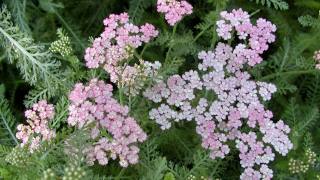
Greetings, fellow organism. We are yarrow, a resilient and ancient lineage of plants known to you as *Achillea millefolium*. While we have a reputation for being tough and adaptable, thriving in the conditions we discuss will allow us to flourish, not just survive. To truly understand what we need, you must see the world from our roots upward.
From our perspective, the single most critical factor for our root system's health is the movement of water through the soil. Our roots are fine, fibrous, and highly susceptible to rot if they are forced to sit in saturated, oxygen-poor earth. We despise "wet feet." Therefore, the ideal soil for us is one that allows water to percolate through quickly after a rain or watering. Think of sandy or gravelly loams. If you place us in heavy, compacted clay, you are essentially suffocating us. If such conditions are unavoidable, you must amend the soil generously with gravel, sand, or perlite to create the airy structure we crave. Well-drained soil is not a preference; it is a requirement for our survival.
Contrary to what you might think after cultivating heavy-feeding plants, we yarrow are not gluttons for nutrients. In fact, we are specialists in lean soils. Rich, heavily amended garden beds high in nitrogen and organic matter will cause us to become lax and floppy. We will produce an overabundance of weak, soft foliage at the expense of our strong, iconic flower clusters. We perform best in soils that are low to moderate in fertility. This encourages us to develop a strong, deep root system as we search for resources, which in turn supports sturdy, upright growth and a profusion of flowers. Excess fertility makes us lazy and weakens our structural integrity.
We are remarkably accommodating when it comes to soil acidity or alkalinity. Our root systems can efficiently access nutrients across a wide pH spectrum, from slightly acidic (around 5.5) to slightly alkaline (around 7.5). This adaptability is one of the keys to our success in diverse habitats, from meadows to roadsides. While we are flexible, we tend to exhibit the most vigorous growth in a neutral to slightly alkaline soil. However, you need not go to great lengths to adjust the pH for us specifically; we are far more concerned with the physical structure and nutrient level of the soil than its precise pH.
Our soil requirements are intrinsically linked to our need for full sun. We are sun-worshippers, requiring a minimum of six to eight hours of direct sunlight daily. The well-drained soil we demand works in concert with this abundant light. The sun helps to dry the soil surface, preventing the dampness that leads to fungal issues at our crown. Furthermore, the energy we capture from the sun fuels our growth and flowering, a process that is optimized when our roots are not struggling in waterlogged or overly rich conditions. Planting us in a sunny spot with the right soil creates a synergistic effect, allowing us to express our full potential of drought tolerance, pest resistance, and prolific blooming.