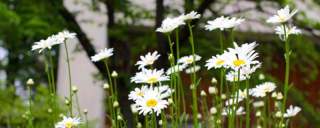
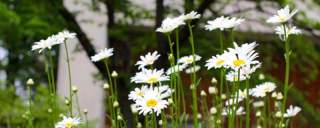
Greetings, caretaker. You have noticed our distress signal – the drooping of our leaves. From our perspective, this is not merely an aesthetic issue; it is a fundamental communication of our well-being. We daisies rely on turgor pressure, the water-filled state of our cells, to keep our stems upright and leaves spread wide to capture sunlight. When that pressure drops, we sag. Let me explain the primary reasons for this condition from our point of view.
This is our most frequent plea. Our root systems are designed to draw water from the soil, which then travels up through our stems to every leaf and petal. Two scenarios disrupt this flow:
Underwatering: When the soil becomes too dry, our roots simply have nothing to drink. The water column within our stems breaks, and our cells deflate like tiny, forgotten balloons. You will notice the soil pulling away from the edges of the pot, and it will feel dry to the touch deep down. Our entire being becomes limp, starting from the lower leaves upwards.
Overwatering and Root Rot: Paradoxically, too much water can also leave us parched. If our roots are constantly submerged in soggy soil, they are starved of oxygen and begin to decay. These damaged, brown, and mushy roots can no longer absorb water effectively. So, even though the soil is wet, we cannot drink, and we wilt. This is often accompanied by yellowing leaves. Please check our roots; they need to breathe as much as they need to drink.
We are sensitive to our surroundings. Sudden changes can overwhelm our systems. A rapid spike in temperature, perhaps from a midday sun becoming intensely hot, accelerates transpiration (the process of water evaporating from our leaves). If our roots cannot uptake water fast enough to replace this loss, we wilt as a protective measure to reduce our surface area and slow down water loss. Similarly, a sudden cold draft can shock our cellular processes, slowing down water transport and causing a chill-induced droop. Ensure our environment is consistent, with bright but often indirect light, and shelter us from extreme temperature swings.
When you move us from a pot to the garden, or even to a larger container, it is a major event for us. In the process, delicate root hairs—the very structures responsible for most of our water absorption—are inevitably damaged or broken. Until we can regrow these hairs and establish ourselves in the new soil, our ability to draw water is severely compromised. This is why we often droop after being repotted. It is a temporary state of convalescence as we focus our energy on rebuilding our foundational support system underground.
Sometimes, the problem is not the water supply itself, but a breach in the delivery system. Sap-sucking pests like aphids or spider mites pierce our stems and leaves, literally draining the life-giving fluids from us. This direct theft can cause localized or general wilting. Furthermore, fungal or bacterial diseases, such as wilt diseases, can block the vascular tissues (the xylem) that act as our plumbing system. These blockages prevent water from moving upward, causing us to wilt, often irreversibly, even with ample water in the soil.