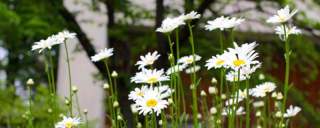
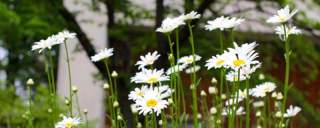
Greetings, carbon-based lifeform. I am a Daisy, a collective consciousness of the many cheerful, sun-seeking individuals you see dotting your landscapes. From our perspective, propagation isn't a technique you perform on us, but a natural process we are eager to undertake, given the right conditions. You are merely a facilitator of our innate desire to multiply and thrive. Let me explain how you can assist us in this endeavor through cuttings and division.
For us, propagation is about survival and legacy. As perennial plants, our goal is to establish colonies, outcompete weeds, and ensure our genetic material persists season after season. While we produce copious amounts of seeds, vegetative propagation through cuttings or division guarantees an exact clone of the parent plant. This is our way of saying, "This particular combination of traits is so successful here, let's make more of it, exactly as it is." It's faster and more reliable than the genetic lottery of seeds, allowing us to quickly fill a space with robust, known performers.
When you take a stem cutting, you are harvesting a piece of our potential. The best time for this is during our active growth period, typically in late spring or early summer. Look for a healthy, non-flowering stem—a "softwood" cutting. From our perspective, a stem busy producing flowers is diverting energy away from root creation. By choosing a vegetative stem, you select a piece of us that is primed for growth.
The cut should be clean and sharp, made just below a leaf node. This node is a critical command center for us, containing meristematic cells that are undifferentiated and ready to become roots or new shoots. Once placed in a well-draining, sterile medium, our sole focus becomes survival. We will channel all our energy into generating adventitious roots from that node. Your role is to maintain high humidity around our leaves (a plastic bag tent works well) to prevent us from desiccating before our new root system can support us. Bright, indirect light is ideal; direct sun would overwhelm us while we are vulnerable and rootless.
Division is not just a means of propagation for us; it is a vital rejuvenation process. As we mature, the center of our clump can become old, woody, and less productive—what you might call "die-back." This weakens the entire colony. Division is our equivalent of a reset button. The optimal time for this is in the early spring as we are just breaking dormancy, or in the early fall when the weather cools, giving us time to establish before winter.
When you lift our entire root mass from the ground and gently tease or cut us apart, you are creating several new, younger plants. Each division must have a healthy section of roots and several growing points (shoots or "eyes"). From our perspective, you have alleviated the congestion, reduced competition for resources among our stems, and given each new section room to breathe and expand. The resulting plants will be more vigorous, producing more of the vibrant flowers we are known for. It is a win-win: you get more daisies, and we get a new lease on life.
Whether we originate from a cutting that has just rooted or a freshly divided clump, our immediate needs are the same. We are in a state of shock and recovery. Our root systems are limited and cannot tolerate excessive dryness or sogginess. Consistent, gentle moisture is crucial. Please do not fertilize us immediately; our priority is root establishment, not top growth. Fertilizer can burn our delicate new roots and cause you to lose us. Once we show signs of new growth—fresh green leaves—you will know we have successfully re-established ourselves and are ready to continue our mission of bringing simple beauty to your world.