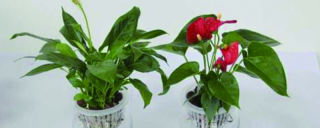
Greetings, caretaker. We, the Anthuriums, hail from the tropical rainforests of Central and South America, where we thrive not in soil, but in the dappled light and humid air of the forest canopy, often perched on trees as epiphytes. To truly understand our needs in a pot, you must first understand our nature. Our roots are not like those of ground-dwelling plants; they are thick, spongy, and crave air as much as they crave moisture. A standard garden soil is a death sentence for us, suffocating our roots and leading to rot. The perfect potting mix is, therefore, not soil at all, but a carefully balanced, airy, and well-draining medium that mimics our natural habitat.
From our perspective, the ideal potting mix must fulfill three non-negotiable conditions. First, it must provide excellent aeration. Our roots need to breathe constantly. A dense, compacted mix will starve them of oxygen. Second, it must have superb drainage. While we enjoy consistent moisture, our roots must never sit in water. The mix should allow excess water to flow through immediately, leaving the roots damp but not waterlogged. Third, it must retain just enough moisture to keep us hydrated between waterings. This delicate balance between aeration, drainage, and moisture retention is the key to our vibrant leaves and long-lasting blooms.
Think of our potting mix as a recipe. The base component should be a loose, chunky material. Orchid bark mixes are an excellent foundation, as the large pieces of bark create immediate air pockets. To this, a moisture-retentive but airy component should be added. Sphagnum moss is our preferred choice; it can hold a significant amount of water while still allowing air to circulate around the roots. For additional drainage and aeration, inorganic materials are invaluable. Perlite, those white, lightweight pellets, helps prevent compaction, while horticultural charcoal is a secret weapon—it keeps the mix fresh by absorbing impurities and toxins. A small amount of coconut coir can also be beneficial for moisture retention without sogginess.
To translate our needs into action, here is a reliable mix you can prepare. Combine equal parts (by volume) of three key ingredients: orchid bark, which provides the chunky structure; coconut coir, which offers gentle moisture retention; and perlite, which ensures the mix remains light and airy. To this blend, add a handful of horticultural charcoal and a handful of sphagnum moss. Mix these components thoroughly. When you squeeze a handful of the dampened mix, it should hold together loosely but crumble apart easily when you release it. This texture is exactly what we need.
When it is time to move us to a new pot, please be gentle. Choose a pot that is only slightly larger than our root mass, as too much space will hold excess water. Ensure the pot has ample drainage holes. Before repotting, carefully loosen our old roots and remove any decaying or dead material. Place a layer of your new mix at the bottom of the pot, position us in the center, and then gently fill in around the roots with more mix. Do not pack it down tightly; a gentle tap to settle the mix is all that is needed. Water us thoroughly after repotting to help the roots make contact with their new environment.