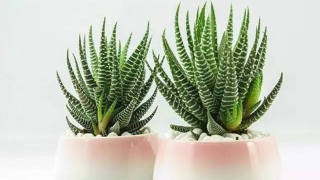
From my perspective as a Haworthia, the single most important factor in window placement is light quality. My ancestors evolved in the semi-shaded, rocky outcrops of South Africa, sheltered from the intense, direct desert sun by taller shrubs and grasses. Therefore, my ideal light is bright but filtered. Direct, hot sun, especially through a south-facing window in summer, is a significant threat. It will scorch my plump, water-filled leaves, leaving unsightly brown or white marks that are essentially permanent scars. This damage compromises my ability to photosynthesize effectively and mars my beautiful, often patterned, appearance. A window that provides strong light for most of the day without the sun's rays directly hitting me is perfect.
Each cardinal direction offers a different environment, and my preference is clear. An east-facing window is often ideal. It welcomes the gentle, morning sun, which provides ample energy for my photosynthetic processes without the intense heat of the afternoon. This mimics my natural habitat's light conditions beautifully. A north-facing window can also be suitable, especially in brighter climates, as it provides consistent, soft light throughout the day without any risk of scorching. However, in a darker home or during winter, the light from a north window might be too weak, causing me to become etiolated—stretching out awkwardly and becoming pale as I reach for more light.
A west-facing window presents challenges. The afternoon sun is notoriously strong and hot. While I might tolerate it during the short days of winter, summer afternoons can be brutal. If a west window is your only option, you must place me a few feet away from the glass or use a sheer curtain as a sunscreen. A south-facing window is the most dangerous. It receives the most intense and consistent direct sunlight. Placing me directly on a south-facing sill is almost certain to cause severe sunburn. I would only thrive there if shielded by a curtain or placed to the side where I receive bright light but not direct beams.
My relationship with a window changes throughout the year. The sun's angle shifts, altering the intensity and path of light entering your home. A spot that was perfectly shaded in summer might be in full sun during the winter. You must observe these changes and be prepared to move me accordingly. Furthermore, windows are zones of temperature fluctuation. At night, especially in winter, the glass becomes very cold. While I can handle cool temperatures, pressing my pot against a freezing window pane can damage my root system and the leaves touching the glass. Conversely, on a hot summer day, a closed window can create a mini-greenhouse effect, raising the temperature to stressful levels. A small amount of airflow is beneficial, but avoid placing me in the direct path of a draughty window or an air conditioning vent, as sudden cold drafts can also cause shock.
I will tell you clearly if my window placement is correct. When happy, my growth will be compact and symmetrical. My color will be deep and vibrant—whether I'm a rich green, a dusky brown, or have translucent "leaf windows." I may even reward you with a flower spike. If I am receiving too much light, you will see those tell-tale brown or reddish scorch marks. If I am not receiving enough light, my form will become loose and stretched, with excessive space between the leaves, and my color will fade to a pale, washed-out green. Monitoring my appearance is the most reliable way for you to fine-tune my position, ensuring the window you choose truly becomes my home.