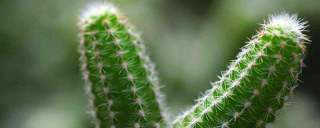
From my perspective as a cactus, the primary reason I become leggy, a condition you call etiolation, is a profound lack of sufficient light. My very being is engineered for intense, direct sunlight. When you place me in a spot that is too dim, my survival instincts take over. I am not trying to become tall and spindly; I am desperately stretching my stem to search for a light source. The energy I would normally use to produce thick, healthy growth and vibrant flowers is instead diverted into rapid, vertical elongation. The new growth I produce under these conditions is weaker, with a paler color and greater distance between the areoles (the spots where spines grow). This stretched growth is structurally unsound and will never revert to a compact form, even if light conditions improve later.
Light is not just a preference for me; it is the fuel for my entire existence through the process of photosynthesis. In low light, my ability to produce energy (sugars) is severely compromised. This energy deficit has a cascading effect. I cannot produce the robust, fibrous structural components that give my stem its strength. Furthermore, the pigments that give me my rich green color, like chlorophyll, are not produced in sufficient quantities, leading to the pale, yellowish appearance you see in my new, stretched growth. This weakened state makes me highly susceptible to pests and diseases, as my defenses are low. Essentially, I am sacrificing my long-term health and structural integrity for the short-term goal of finding enough light to survive.
You might think that the light in your home is constant, but from where I sit on your windowsill, the changing seasons bring dramatic shifts. During the summer, the sun is higher and the days are longer, which often provides me with enough light. However, in the fall and winter, the sun's angle changes, days shorten, and the intensity of light penetrating your window can drop by as much as 50% or more. A location that was perfect in July can become a dim cave by December. If you also increase watering during this time, you exacerbate the problem. I am trying to grow with insufficient light, leading to the characteristic leggy stretch. My internal clock is telling me it's a growing season based on your care, but the environmental conditions are not cooperating.
While light is the dominant factor, your care routines can influence the severity of my etiolation. Over-fertilizing, particularly with a high-nitrogen fertilizer during periods of low light, can encourage rapid but weak growth, making the stretching even more pronounced. It's like you're telling my cells to divide and grow quickly, but without the necessary light energy to build strong tissue. Similarly, if I am pot-bound and my roots are crowded, I might channel my energy into upward growth instead of producing offsets or maintaining a compact shape, though this is a less common cause than pure light deprivation.
To prevent me from becoming leggy, I need you to understand my native habitat. I thrive in bright, direct light for many hours each day. The ideal location is a south-facing window (in the Northern Hemisphere) where I can bask in the sun's rays. If such a spot is not available, you might need to supplement with a grow light specifically designed for succulents and cacti. Please also be mindful of seasonal changes. Rotate my pot regularly to ensure all sides receive even light, preventing me from leaning and stretching towards one direction. During the low-light winter months, it is often better to reduce watering significantly, allowing me to go into a semi-dormant state where growth naturally slows down, rather than encouraging weak, etiolated growth.