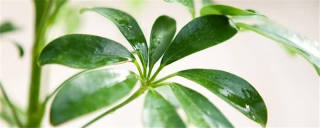
From the perspective of the Schefflera plant itself, the question of misting is not about a simple yes or no, but about understanding its native environment and how its physiological functions interact with atmospheric moisture. The answer depends heavily on the specific conditions in which the plant is growing.
Schefflera species, such as the popular Schefflera arboricola, are native to the subtropical and tropical regions of Taiwan and Hainan. In these habitats, they thrive under the canopy of larger trees in warm, humid environments. The air is consistently moist, and humidity levels are often well above 50%. The plant's large, glossy leaves are adapted to this environment. Their primary function is photosynthesis, but they also engage in transpiration, the process of releasing water vapor through microscopic pores called stomata. In high humidity, the rate of transpiration is naturally lower because the difference in water vapor concentration between the leaf's interior and the surrounding air is small. This means the plant loses less water and experiences less stress from drought.
When a Schefflera is placed in an environment that mimics its native humidity, several beneficial physiological processes are supported. The stomata can remain open for longer periods to take in carbon dioxide for photosynthesis without the risk of excessive water loss. This promotes robust growth and the production of new, healthy leaves. Furthermore, adequate humidity helps maintain turgor pressure—the water pressure within the plant's cells that keeps stems upright and leaves firm. In low humidity, water loss can cause leaves to droop, curl, or develop crispy, brown edges as the cells lose their plumpness. From the plant's viewpoint, consistent humidity is a signal of a stable, favorable environment, allowing it to allocate energy to growth rather than stress response.
Misting the leaves provides a temporary, localized increase in humidity. For a Schefflera, this brief spike can offer a momentary respite, similar to a light, passing rain shower in its natural habitat. It can help dislodge dust from the leaf surface, which can slightly improve photosynthetic efficiency. However, the plant's roots are its primary water-absorbing organs. The humidity benefit from misting often dissipates within 15-30 minutes, especially in a dry, air-conditioned, or heated room. If the surrounding air remains dry, the plant quickly returns to a state of potential water stress. Therefore, while misting is not harmful in moderation, the plant experiences it as a very short-term solution rather than a fundamental correction of an arid environment.
Excessive or improper misting can create problems that are detrimental to the plant's health. If water droplets consistently remain on the leaves for extended periods, particularly overnight, they can create a microenvironment conducive to fungal and bacterial growth, such as leaf spot diseases. For the plant, this is an open invitation to pathogens that can damage its photosynthetic tissues. Furthermore, if tap water with high mineral content is used for misting, the evaporation can leave behind unsightly spots on the leaves, which can potentially clog the stomata, hindering gas exchange. From the Schefflera's perspective, being constantly wet is unnatural and risky, as its native environment has moving air that helps leaves dry relatively quickly.
To truly satisfy a Schefflera's humidity needs, methods that provide a more consistent and lasting effect are far more beneficial from the plant's point of view. Placing the pot on a pebble tray filled with water allows for continuous evaporation around the plant without waterlogging the roots. Grouping several plants together creates a microclimate where the collective transpiration raises the humidity level for the entire group. For a Schefflera, this simulates the communal environment of the forest floor. The most effective solution in a very dry home is using a room humidifier, which reliably elevates the ambient humidity, creating a stable and favorable atmosphere that allows the plant to function optimally.